A Historic Achievement in Aviation
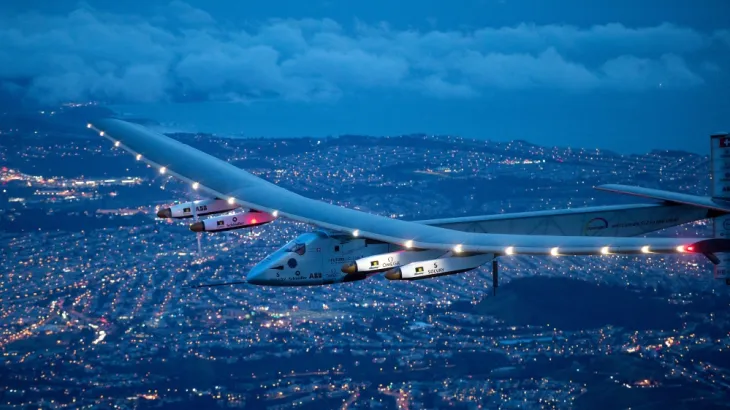
In a groundbreaking moment for aviation and clean energy, Solar Impulse 2 became the first airplane to fly around the world without using a single drop of fuel. Covering more than 40,000 kilometers, this remarkable journey proved that renewable energy can power even the most ambitious technological feats.
The Vision Behind the Project
The project was led by Swiss pioneers Bertrand Piccard and André Borschberg. Their goal was not just to build an aircraft, but to demonstrate the potential of clean technologies in reducing dependence on fossil fuels.
They envisioned an airplane that could harness the power of the sun, store energy, and fly continuously—even at night—without polluting the environment.
Powered Entirely by the Sun
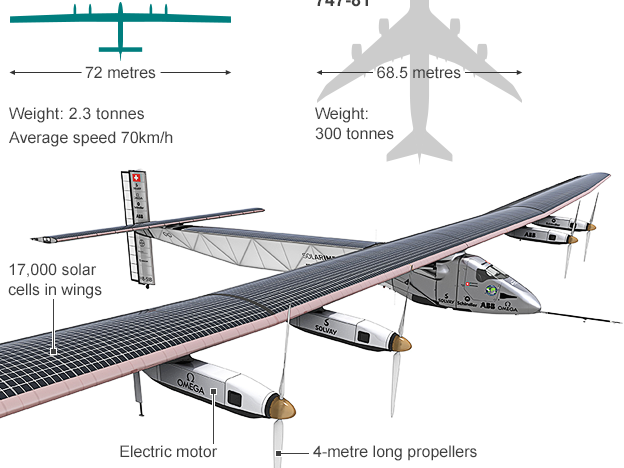
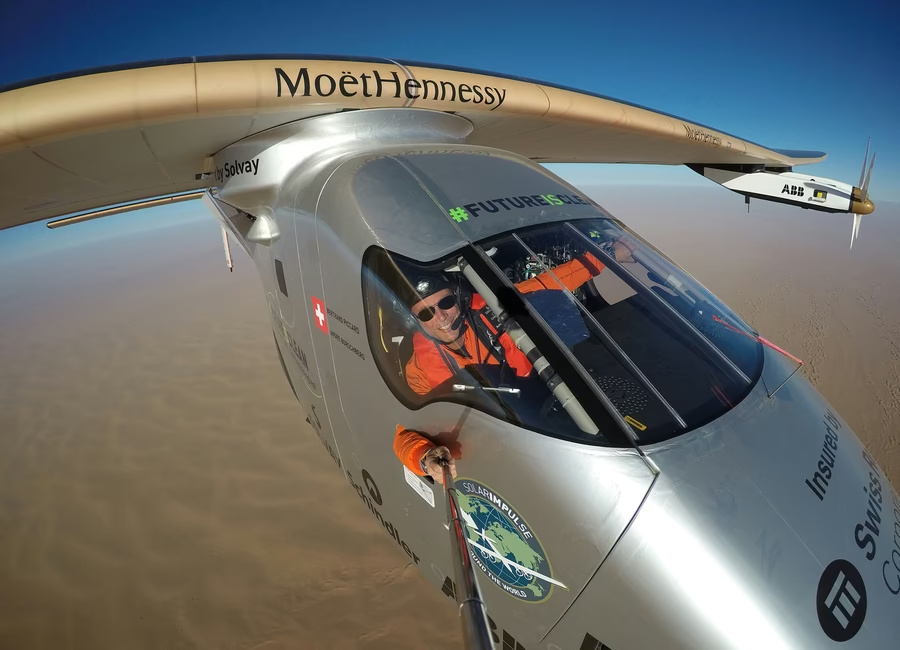
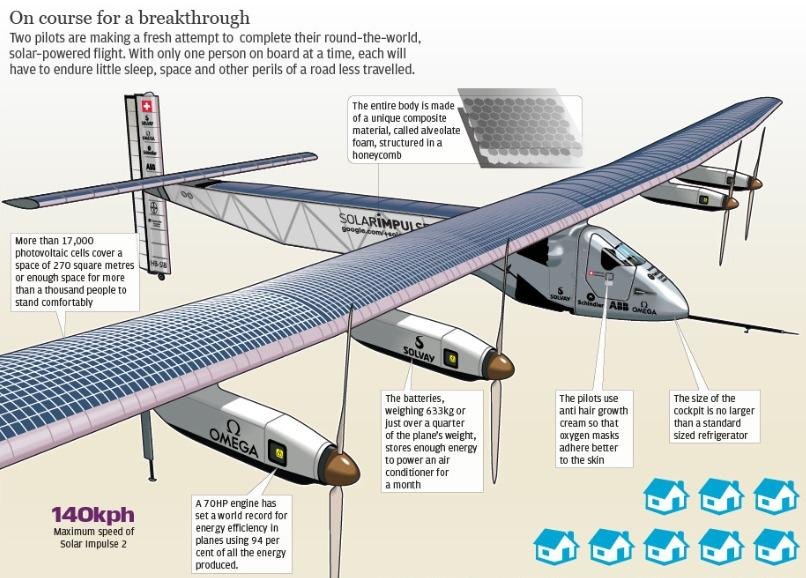
What makes Solar Impulse 2 extraordinary is its reliance on solar energy. The aircraft is equipped with over 17,000 solar cells mounted on its wings. During the day, these cells capture sunlight and convert it into electricity.
This energy powers the plane’s propellers and also charges onboard batteries. At night, the aircraft runs entirely on the stored energy, allowing it to continue flying without interruption.
Engineering Marvel and Design
Despite having a wingspan wider than a Boeing 747, the plane is incredibly lightweight—about the weight of a small car. This combination of large wings and low weight allows it to maximize energy efficiency.
The aircraft’s design focuses on minimizing energy consumption. Every detail, from materials to aerodynamics, was carefully engineered to ensure it could sustain long-duration flights using only solar power.
The Journey Around the Globe
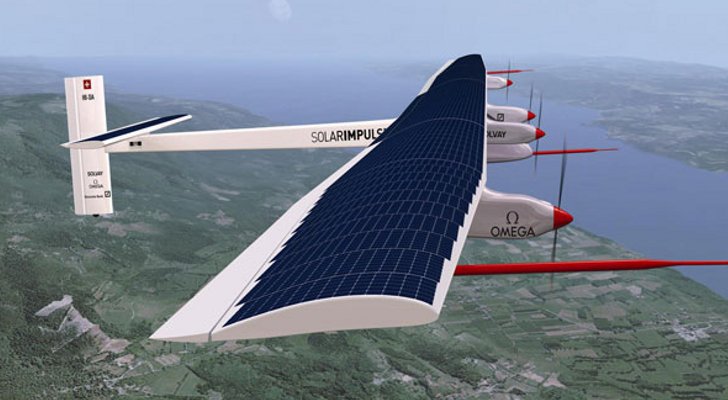
The historic journey began in 2015 from Abu Dhabi. Over the course of multiple stages, the plane crossed continents, oceans, and extreme weather conditions.
One of the most challenging legs was a nonstop flight across the Pacific Ocean, lasting several days. After completing its global circuit, Solar Impulse 2 returned to Abu Dhabi in 2016, successfully completing its mission.
Challenges Along the Way
The journey was not without obstacles. The aircraft had to deal with unpredictable weather, limited speed, and the physical and mental endurance required from its pilots.
Additionally, the project faced technical issues, including battery overheating during one leg of the journey. These challenges required careful planning, innovation, and resilience to overcome.
A Message for the Future
The success of Solar Impulse 2 was not just about aviation—it was about inspiring change. The project demonstrated that clean energy technologies are capable of achieving what once seemed impossible.
It sent a powerful message to governments, industries, and individuals: sustainable solutions are not only viable but essential for the future of our planet.
Beyond Aviation
While solar-powered commercial flights are still in development, the impact of this achievement extends far beyond airplanes. The technologies and ideas proven during this mission can be applied to transportation, energy systems, and environmental innovation worldwide.
Conclusion
The journey of Solar Impulse 2 stands as a symbol of human ingenuity and environmental responsibility. By flying over 40,000 kilometers powered solely by the sun, it redefined what is possible in aviation.
This historic achievement reminds us that with vision, determination, and innovation, a cleaner and more sustainable future is within reach.