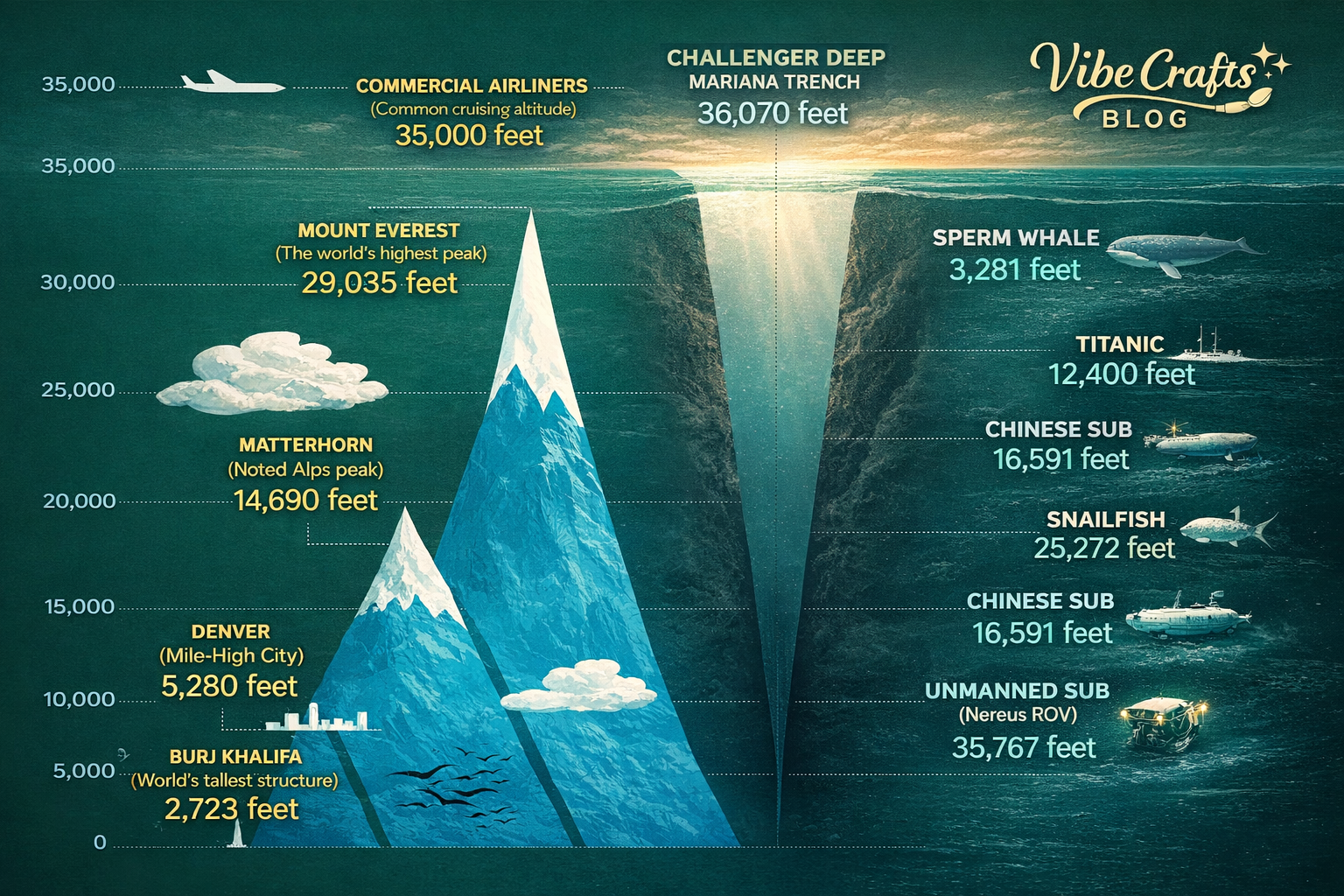
Why Mount Everest would still be submerged in the Mariana Trench and what this reveals about Earth’s extremes.
Introduction: A Mind-Bending Comparison
Have you ever tried to picture the most extreme places on Earth? Maybe you’ve seen photos of snow-covered Mount Everest or deep-sea documentaries showing pitch-black ocean trenches. Both are impressive in their own right—but when you compare them directly, things get a little surreal.
Here’s a claim that often surprises people: if you dropped Mount Everest into the Mariana Trench, its peak would still be about 2 kilometers underwater.
At first glance, it sounds unbelievable. Everest is the tallest mountain on Earth, after all. How could it not even break the surface?
In this article, we’ll break this idea down in simple terms, explain the science behind it, and explore what it reveals about our planet. Along the way, I’ll share practical ways to visualize these extremes so the concept actually sticks—not just as a random fact, but as something you truly understand.
Understanding the Basics
How Tall Is Mount Everest?
Mount Everest stands at about 8,848 meters (29,031 feet) above sea level. That’s roughly 8.8 kilometers.
For context:
- Commercial airplanes fly at around 10–12 kilometers
- Most weather happens below 12 kilometers
So Everest is incredibly tall—but still within the lower part of Earth’s atmosphere.
How Deep Is the Mariana Trench?
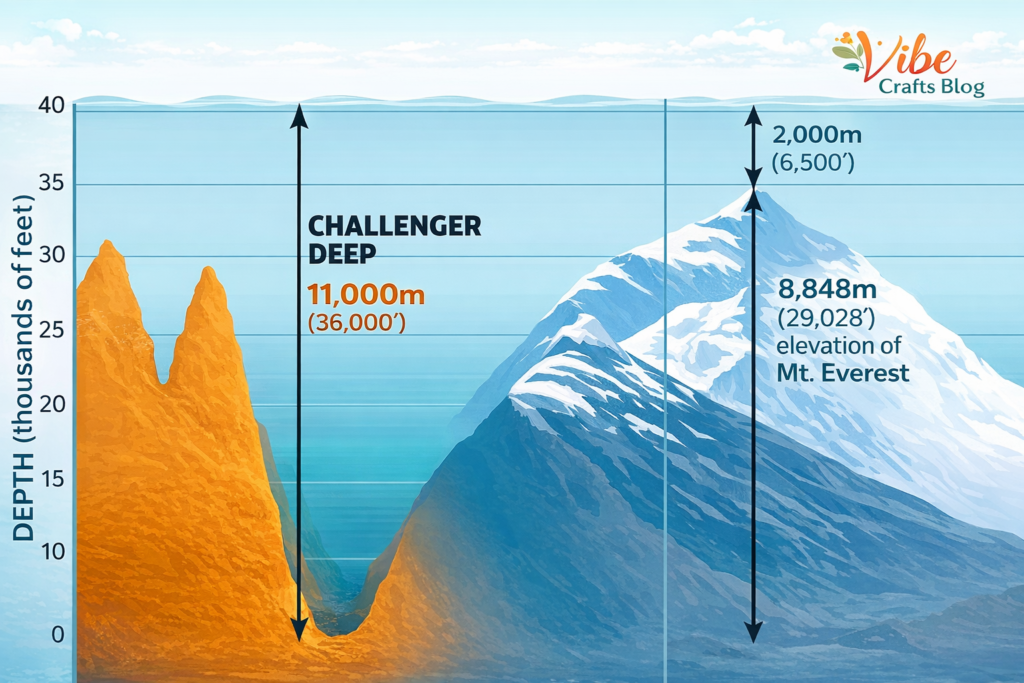
The Mariana Trench is the deepest known part of the ocean. Its deepest point, called Challenger Deep, reaches approximately 10,900 meters (10.9 kilometers) below sea level.
That’s deeper than Everest is tall.
Putting It Together
Now let’s compare:
- Depth of Mariana Trench: ~10.9 km
- Height of Mount Everest: ~8.8 km
If you place Everest at the bottom:
10.9 km – 8.8 km = 2.1 km
That means Everest’s peak would still be over 2 kilometers underwater.
Why This Feels So Hard to Believe
Our brains aren’t great at comparing extreme scales, especially when they’re in opposite directions—like height vs. depth.
Here’s why this fact feels counterintuitive:
1. We Experience Mountains More Than Depth
Most people have seen mountains, even if only from a distance. But very few people have experienced true ocean depth. The ocean hides its scale.
2. Water Creates a Visual Illusion
When you look at the ocean, it appears flat and calm. There’s no visible “drop” like a mountain cliff. That makes it harder to grasp just how deep it goes.
3. We Think “Tallest = Biggest”
We naturally assume the tallest mountain must represent the biggest vertical extreme. But Earth’s oceans go even further in the opposite direction.
A Simple Way to Visualize It
Let’s make this more practical.
Imagine this step-by-step:
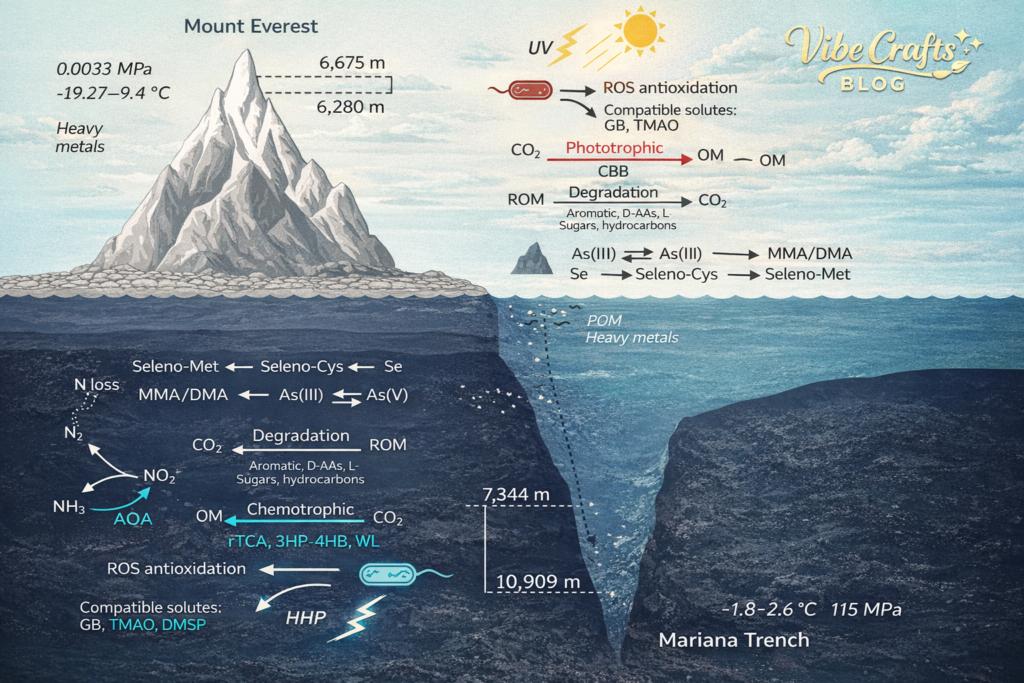
- Picture Mount Everest sitting on land.
- Now imagine slowly lowering it into the ocean.
- Keep lowering it until its base touches the bottom of the Mariana Trench.
- Look at the peak.
Even after all that, the summit is still buried under more than 2 kilometers of water.
That’s like stacking over six Burj Khalifas on top of Everest—and still not reaching the surface.
What This Reveals About Earth
This comparison isn’t just a fun fact—it tells us something important about how our planet works.
Earth’s Surface Isn’t Balanced
The land we live on represents only part of Earth’s surface variation. The oceans cover about 71% of the planet, and much of that area is incredibly deep.
Ocean Floors Are More Extreme Than Land
While mountains get the spotlight, the ocean floor has:
- Deeper valleys
- Larger continuous features
- More dramatic vertical differences
Pressure Changes Everything
At the bottom of the Mariana Trench, the pressure is over 1,000 times what we feel at sea level.
If Everest were there, it wouldn’t just be underwater—it would be in a completely alien environment.
Step-by-Step: How to Explain This to Someone Else
If you ever want to explain this concept clearly (for a blog, video, or conversation), here’s a simple approach that works well.
Step 1: Start With Familiar Numbers
Tell them:
- Everest is about 8.8 km tall
- The trench is about 10.9 km deep
Avoid overwhelming them with too many figures.
Step 2: Do the Subtraction
Walk through it slowly:
- 10.9 – 8.8 = 2.1 km
This is the key moment where it “clicks.”
Step 3: Use Real-World Comparisons
Say something like:
- “That’s still deeper than most mountains are tall.”
Or:
- “It would still be underwater by more than the height of several skyscrapers stacked together.”
Step 4: Reinforce With a Visual
Encourage them to imagine lowering Everest into a giant underwater pit.
This mental image makes the idea stick far better than numbers alone.
Real-Life Style Examples
Example 1: Explaining It to a Student
A teacher once tried to explain this concept using only numbers. The students nodded—but didn’t really get it.
The next day, the teacher brought a simple diagram:
- A line representing sea level
- A triangle for Everest
- A deep trench drawn below
Seeing Everest fully submerged changed everything. The students immediately reacted with surprise—and finally understood.
Lesson: Visuals often beat raw data.
Example 2: Creating a Viral Social Media Post
A content creator wanted to make a short educational video. Instead of listing facts, they animated the scenario:
- Everest appears above water
- It slowly sinks into the trench
- The peak disappears beneath the surface
The final frame shows “Still 2 km underwater.”
That video performed far better than their previous content.
Lesson: Turning abstract facts into motion or story makes them memorable.
Common Mistakes to Avoid
1. Mixing Up Sea Level and Ground Level
Everest’s height is measured from sea level, not from its base. This confuses many people.
2. Assuming the Ocean Floor Is Flat
Some imagine the ocean floor as a flat surface. In reality, it’s full of mountains, ridges, and trenches.
3. Underestimating Ocean Depth
People often think the ocean is only a few kilometers deep at most. In reality, it goes much deeper in certain areas.
4. Ignoring Scale Differences
Comparing kilometers to everyday objects without context can lead to misunderstanding. Always translate numbers into relatable visuals.
FAQ
1. Is the Mariana Trench the deepest place on Earth?
Yes, it’s currently the deepest known location in Earth’s oceans, with Challenger Deep being the lowest point.
2. Could anything survive at that depth?
Surprisingly, yes. Certain microorganisms and deep-sea creatures have adapted to extreme pressure and darkness.
3. Are there mountains taller than Everest if measured differently?
Yes. For example, Mauna Kea (in Hawaii) is taller than Everest when measured from its base on the ocean floor.
4. Why don’t we explore the Mariana Trench more?
Extreme pressure, darkness, and technical challenges make exploration difficult and expensive.
Conclusion: A Simple Fact That Changes Perspective
The idea that Mount Everest would still be submerged in the Mariana Trench isn’t just a cool statistic—it’s a reminder of how little we truly grasp Earth’s scale.
Once you break it down, the math is simple. But the implications are huge:
- The oceans are deeper than we imagine
- Earth’s extremes go far beyond what we see on land
- Perspective changes everything
Next time you look at a mountain, remember—there are places on this planet so deep that even the tallest peak wouldn’t reach the surface.
And if you’re creating content, teaching, or just sharing knowledge, keep this in mind:
Numbers inform—but visuals and simple comparisons make people understand.