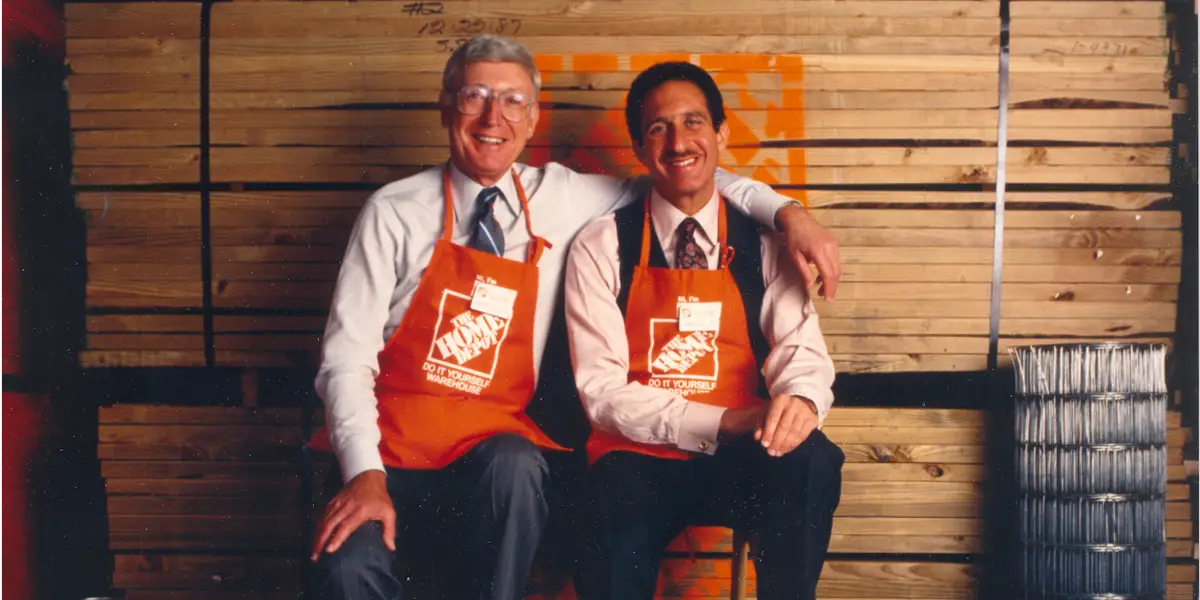
Fired at 49: The Moment Everything Fell Apart
In 1978, two seasoned retail executives—Bernie Marcus and Arthur Blank—were abruptly fired from their leadership positions at Handy Dan Home Improvement.
The dismissal wasn’t just professional—it was deeply personal. Accused of financial irregularities (charges they denied), they were publicly humiliated and left without jobs at an age when most people are thinking about stability, not starting over.
At 49 years old, both men stood at a crossroads: retire quietly, or rebuild everything from scratch.
They chose the harder path.
Turning Failure Into Fuel
Instead of retreating, Marcus and Blank saw opportunity where others saw defeat. They believed the home improvement industry was broken—fragmented, overpriced, and lacking customer support.
Their vision was radical for the time:
- Massive warehouse-style stores
- Lower prices through high volume
- Knowledgeable staff who could actually help customers
They weren’t just starting another store—they were reinventing an entire industry.

The Birth of a Giant: The Home Depot
In 1979, with the help of investor Ken Langone and merchandising expert Pat Farrah, they launched The Home Depot.
The concept was simple but powerful:
- Bigger stores than anyone had ever seen
- A wide range of products under one roof
- A focus on customer education and service
At first, many doubted them. The stores were too large. The prices seemed too low to sustain. The idea looked risky.
But customers loved it.
Building an Empire From Nothing
What followed was one of the most remarkable growth stories in business history.
Within just a few years:
- The Home Depot expanded rapidly across the United States
- Sales skyrocketed
- The company went public in 1981
By the 1990s, it had become the dominant force in home improvement retail—far surpassing the company that had once fired them.
Their “warehouse retail” model didn’t just succeed—it became the industry standard.

Erasing the Competition That Betrayed Them
The ultimate irony? The very company that dismissed them—Handy Dan—couldn’t keep up.
As The Home Depot expanded, Handy Dan declined. Eventually, it went out of business entirely.
Marcus and Blank didn’t just recover—they built something so powerful that it rendered their former employer irrelevant.
Their success didn’t just prove a point—it rewrote the rules of retail.
Leadership, Culture, and Customer Obsession
A key to their success wasn’t just strategy—it was culture.
Marcus and Blank built a company that:
- Empowered employees
- Prioritized customer satisfaction
- Encouraged innovation at every level
They believed that if you take care of your people, they will take care of your customers—and the business will follow.
This philosophy became a cornerstone of The Home Depot’s identity.

Lessons From Their Comeback
Their story offers powerful lessons:
1. It’s never too late to start over
At 49, they proved that age is not a limitation—it can be an advantage.
2. Failure can be a launchpad
What seemed like the end of their careers became the beginning of something greater.
3. Vision beats circumstance
They didn’t let humiliation define them—they let their ideas drive them forward.
4. Build something better, not just something new
They didn’t copy competitors—they changed the game entirely.
From Humiliation to Legacy
Today, The Home Depot is one of the largest retailers in the world, employing hundreds of thousands and generating billions in revenue.
But behind the orange logo is a story of resilience, reinvention, and quiet revenge.
Bernie Marcus and Arthur Blank didn’t just bounce back from failure—they built something so massive that it erased the memory of the company that once cast them aside.
And in doing so, they proved a timeless truth:
Sometimes, the greatest success comes after the greatest setback.