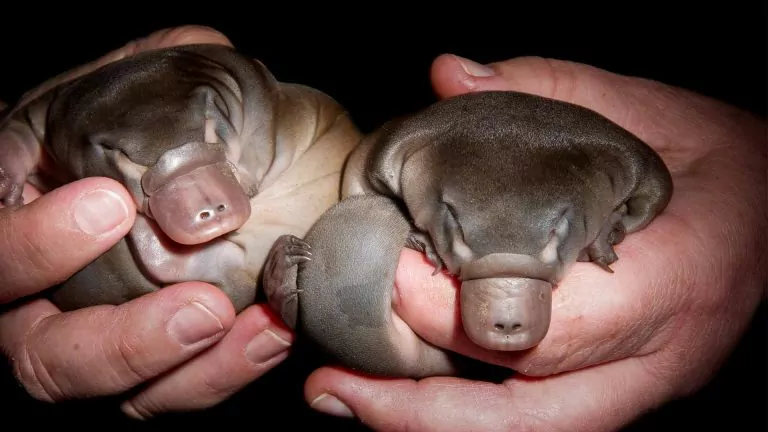
The platypus is one of the most unusual mammals on Earth. With its rare combination of traits, it challenges the traditional boundaries between animal groups. Below is a detailed breakdown of its features, each explored separately to better understand this extraordinary creature.
Classification: A Unique Monotreme
The platypus belongs to a rare group of mammals known as monotremes. Unlike most mammals that give birth to live young, monotremes lay eggs. This places the platypus in a very small and ancient branch of the mammalian family tree, alongside echidnas. Despite this reptile-like trait, it still shares key mammalian features such as warm blood and milk production.
Physical Appearance: A Patchwork of Traits
The platypus looks like a blend of several animals. It has:
- A duck-like bill
- A beaver-like flat tail
- Otter-like webbed feet
Its dense, waterproof fur helps it survive in cold water, while its streamlined body makes it an efficient swimmer. This unusual combination once confused scientists, who initially thought it might be a fake specimen.
Egg-Laying Ability: A Mammalian Exception
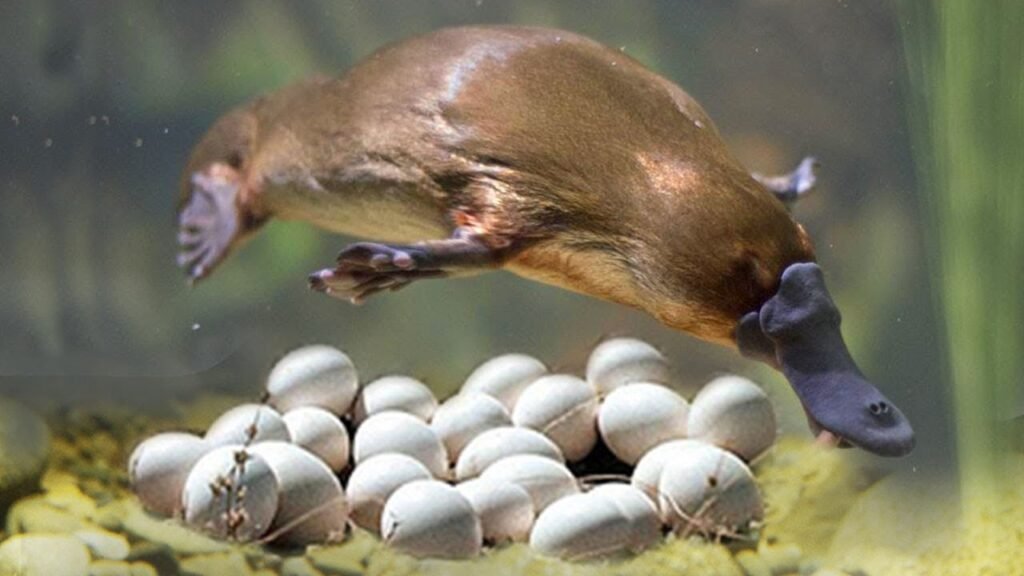
One of the platypus’s most fascinating traits is that it lays eggs. After mating, the female lays one to three soft-shelled eggs and incubates them by curling around them. This reptile-like reproductive method is extremely rare among mammals and highlights the platypus’s ancient evolutionary roots.
Milk Production: Feeding the Young
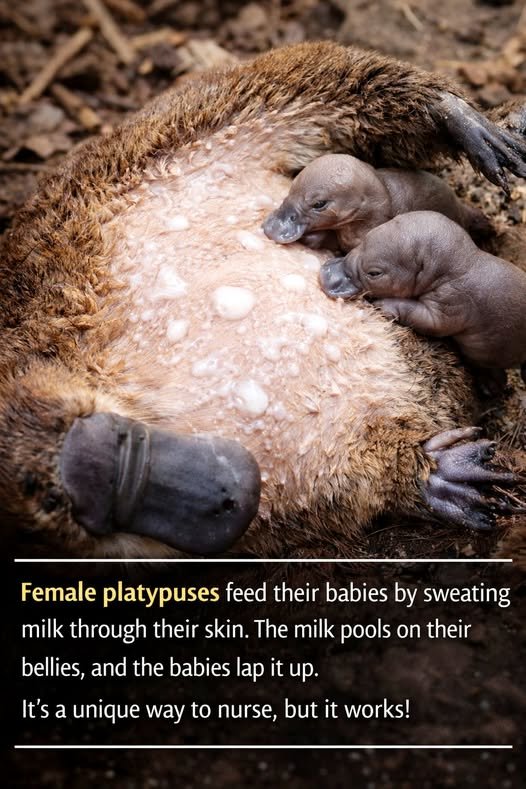
Even though it lays eggs, the platypus still produces milk to nourish its young. However, it does not have nipples. Instead, milk is secreted through pores in the skin and collects in grooves on the mother’s body, where the babies lap it up. This unusual feeding method is another example of how the platypus defies expectations.
The “Custard” Connection
Because the platypus both lays eggs and produces milk, it humorously earns the title of the only animal that can “make its own custard.” While this is just a playful comparison, it effectively highlights the rare combination of biological traits found in this species.
Sensory Abilities: Electroreception
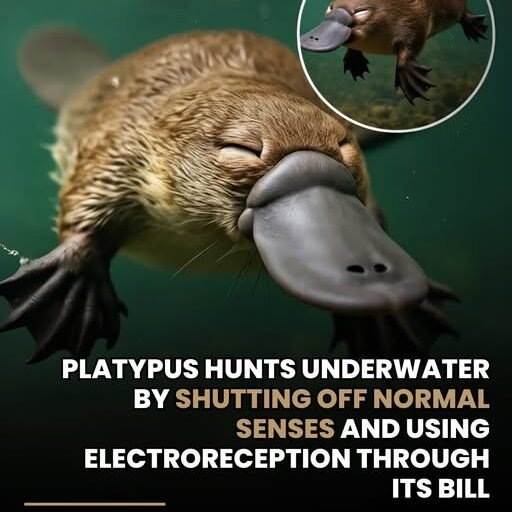
The platypus has a highly specialized bill that can detect electrical signals produced by the muscles of its prey. This ability, known as electroreception, allows it to hunt underwater with its eyes, ears, and nostrils closed. It mainly feeds on small aquatic creatures like insects, worms, and crustaceans.

Venom: A Rare Mammalian Defense
Male platypuses possess venomous spurs on their hind legs. These spurs can deliver a painful sting, especially during the breeding season when males compete for mates. While not deadly to humans, the venom is strong enough to cause significant pain.
Habitat and Lifestyle
Platypuses are found in freshwater rivers and streams in eastern Australia. They are excellent swimmers, using their webbed feet for propulsion and their tails for steering. They spend much of their time in the water searching for food but rest in burrows along riverbanks.
Evolutionary Significance
The platypus is often described as a “living fossil” because it retains many primitive features from early mammalian evolution. Its mix of traits provides valuable insight into how mammals evolved over millions of years, making it an important species for scientific study.
Conclusion
The platypus is far more than just an odd-looking animal. From laying eggs to producing milk, sensing electricity, and even delivering venom, it stands as one of nature’s most fascinating creations. Its so-called ability to “make its own custard” may be humorous, but it perfectly captures the wonder and uniqueness of this incredible species.