 11
11
Behind every great luxury brand lies a story of struggle. The legend of Rolls-Royce begins not with wealth or privilege, but with hardship, discipline, and relentless perfectionism. At the center of it all was Henry Royce — a boy who started working at the age of nine and never completed formal schooling.
Yet he would go on to build one of the most prestigious automotive brands in history: Rolls-Royce.
Henry Royce was born in 1863 in England to a struggling family. When his father’s flour mill business failed and he later died, young Henry’s childhood ended abruptly.
At just nine years old, Royce was forced to work to help support his family. He sold newspapers and delivered telegrams to survive. Education became a luxury he could not afford. Though he briefly attended school, financial difficulties meant he never completed formal education.
But what he lacked in schooling, he made up for with obsession, curiosity, and discipline.
Royce became apprenticed to an engineering firm as a teenager. He was fascinated by machines. Without a university degree, he trained himself by studying mechanical systems late into the night.
He later started a small business manufacturing electrical fittings and dynamos. His early company built a reputation for one thing:
Precision.
If a product was flawed, Royce would redesign it. If it made noise, he would quiet it. If it vibrated, he would smooth it.
He had a personal motto:
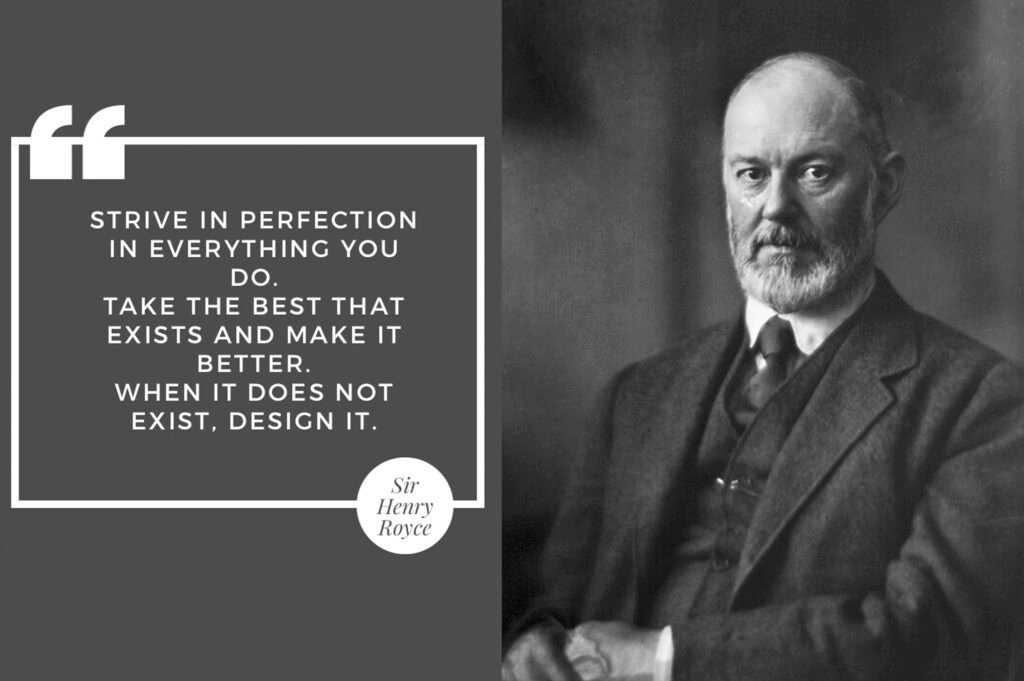
“Strive for perfection in everything you do.”
This mindset would define his life.
In the early 1900s, Royce bought a small French car — a Decauville — but he was deeply disappointed by its unreliability. Instead of complaining, he decided to build a better one.
In 1904, he created his first automobile: the Royce 10.
The Royce 10 was simple, elegant, and mechanically superior to many competitors of its time. It was quiet, smooth, and carefully engineered — a rare achievement in the early days of motoring.
Around this time, Royce was introduced to Charles Rolls, a wealthy aristocrat and car dealer who was looking for a reliable British car to sell.
When Rolls drove Royce’s car, he was impressed.
The two men formed a partnership in 1904, agreeing that all cars would be sold under the name:
Rolls-Royce
The partnership combined Royce’s engineering genius with Rolls’ business connections and passion for motoring.
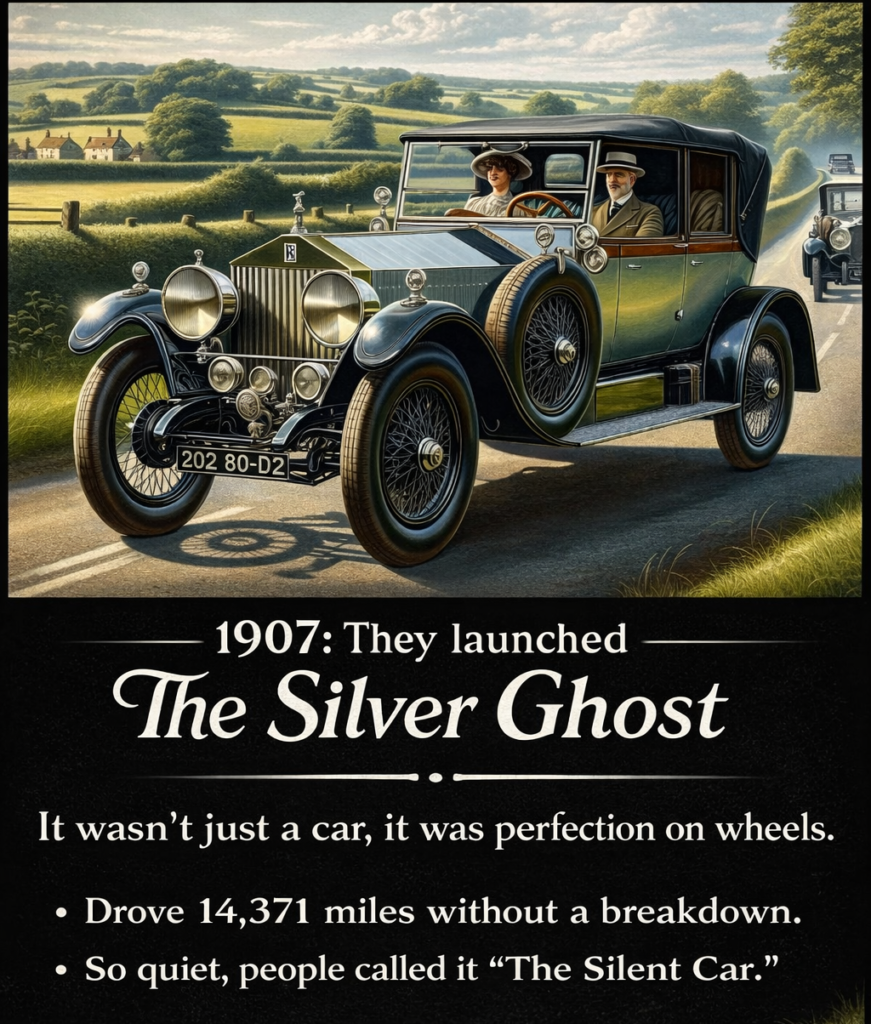
In 1906, the company introduced the car that would define its reputation:
Rolls-Royce Silver Ghost
It quickly earned the nickname “The Best Car in the World.” It was astonishingly reliable for its time and could travel long distances without mechanical failure — something rare in early automobiles.
The Silver Ghost established Rolls-Royce as a symbol of excellence, luxury, and engineering superiority.
Despite building one of the most luxurious brands in history, Henry Royce never lived extravagantly. He was intensely private and almost obsessively focused on mechanical perfection.
He suffered from poor health throughout his life, likely worsened by overwork. Even while ill, he continued designing engines and improving vehicles from his home workshop.
Few people know that Royce also played a major role in aviation engineering. During World War I, he helped develop aircraft engines that were crucial to Britain’s war effort.
He never stopped refining his designs.
Never stopped correcting flaws.
Never stopped chasing perfection.
Henry Royce died in 1933, but his philosophy remains embedded in every Rolls-Royce vehicle today.
From a nine-year-old working to survive…
To the co-founder of one of the most prestigious automotive brands on earth…
His life proves something powerful:
Formal education may shape a person — but discipline, curiosity, and relentless standards can build empires.
And it all started with a boy who refused to accept “good enough.”