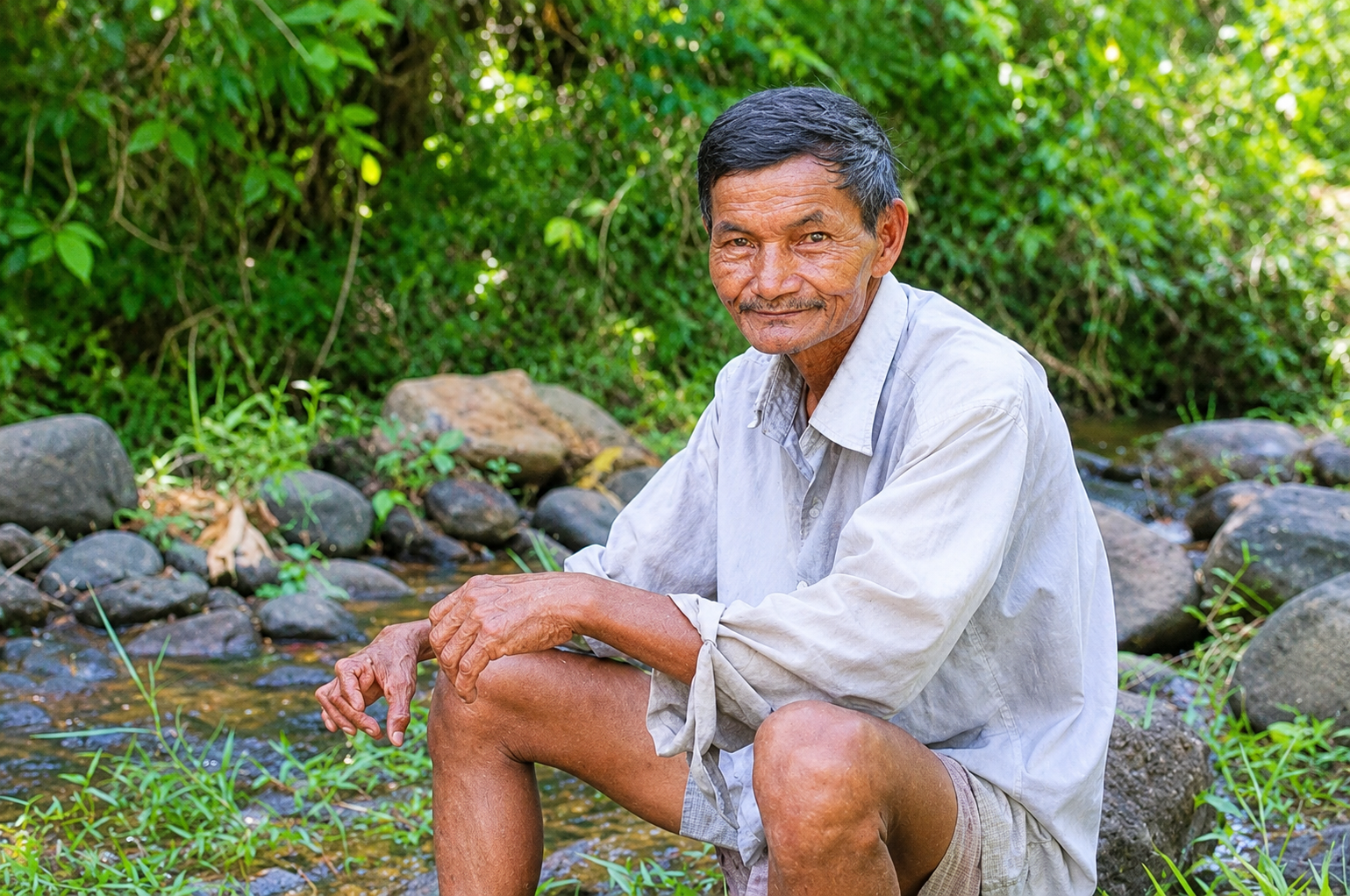
Imagine going to bed every night, closing your eyes, and waiting for sleep, only to watch the hours pass without ever falling asleep. Now imagine experiencing that same situation for more than five decades.
For most people, even one sleepless night can make the following day difficult. However, a Vietnamese farmer named Thai Ngoc has attracted worldwide attention because he claims that he has lived without normal sleep for more than 50 years, with many media reports describing his experience as nearly six decades without sleep.
His unusual story has fascinated journalists, documentary filmmakers, and curious readers around the world. Even more surprising, Ngoc continues to live in rural Vietnam, where he spends much of his time working on his farm.
But how did this unusual condition begin? How does he manage his daily life? And is it actually possible for a person to remain awake for decades?
Let’s explore the extraordinary story of Thai Ngoc.
Who Is Thai Ngoc?
Thai Ngoc, also known as Hai Ngoc, is a Vietnamese farmer from the central region of Vietnam. He reportedly lives in the Quang Nam area, which became part of Da Nang following Vietnam’s administrative changes.
Reports identify him as someone who developed an unusual sleeping problem after experiencing a severe fever in the 1970s.
According to his own account, he gradually lost the ability to sleep normally after that illness. He says that he has tried different remedies but has never found a lasting solution.
His story first attracted significant media attention through Vietnamese newspapers. Over the years, international journalists and television crews also visited his home to learn more about his unusual condition.
Despite the attention, Ngoc has continued to lead a relatively simple rural life with his family.
The Fever That Changed His Life
According to Ngoc, his sleeping problems began after a severe fever around 1973 or 1975. Different reports give slightly different dates, but they consistently describe the illness as the starting point of his unusual experience.
He says that he initially expected his sleeping difficulties to disappear after recovering from the fever. However, the problem continued.
Instead of enjoying a normal night’s rest, he reportedly spent long hours awake. He eventually adapted his daily routine to accommodate the unusual sleeping pattern.
In interviews, Ngoc has explained that he often feels sleepy but cannot fall into deep sleep.
This detail matters because his experience may involve more than simply staying awake throughout the night. His personal description suggests that he struggles to achieve the rest that most people experience during sleep.
How Does He Spend His Sleepless Nights?
One of the most interesting parts of Ngoc’s story involves his daily activities.
While many people spend their evenings resting after work, Ngoc reportedly uses nighttime hours to complete agricultural tasks and look after his property.
Vietnamese media have described him working in his fields, digging ponds, carrying agricultural supplies, and caring for trees.
A 2012 report from Vietnam’s Voice of Vietnam (VOV) described how he used his extra waking hours to develop his farmland and help people in his community.
He also reportedly spends time making household items and looking after his agricultural projects.
Ngoc has explained that he sometimes feels frustrated when he has nothing to do during the night. Rather than simply waiting for morning, he tries to find useful activities.
His story offers an unusual picture of rural life, where long working hours and agricultural responsibilities shape his daily routine.
Did Foreign Film Crews Try to Verify His Story?
Thai Ngoc’s claim naturally attracted skepticism. After all, sleep plays an essential role in human health, and most people cannot function normally without regular rest.
Several international television crews reportedly visited his home to observe his nighttime activities.
A 2012 VOV report described visits from Thai and British film crews. The journalists reportedly spent several days observing Ngoc and documenting his routine.
Some accounts describe camera monitoring and overnight observations. These visits helped bring his story to a wider international audience.
However, an important distinction remains: watching someone stay awake for several nights cannot prove that the person has avoided every form of sleep for decades.
A complete scientific investigation would require appropriate sleep monitoring over a carefully controlled period.
To date, publicly available reports have not established that Ngoc has gone without all physiological sleep for more than 50 years.
What Does Science Say About His Condition?
Sleep remains one of the most important biological requirements for human health. It supports memory, brain function, emotional regulation, and physical recovery.
The American Academy of Sleep Medicine recommends that adults regularly get at least seven hours of sleep each night.
Scientists also recognize that some people experience a condition known as sleep state misperception, sometimes called paradoxical insomnia.
People with this condition may feel that they sleep very little or do not sleep at all, even when objective sleep recordings show that they receive more sleep than they realize.
A 2023 review published in the Journal of Sleep Research examined this difference between a person’s experience of sleep and measurements from sleep studies.
This research offers one possible explanation for some unusual insomnia experiences. However, it does not establish that Thai Ngoc has this condition.
Researchers would need to conduct appropriate sleep studies before they could identify the actual cause of his reported sleeping difficulties.
Could He Be Experiencing Short Periods of Unnoticed Sleep?
Some sleep specialists discuss brief or unrecognized periods of sleep when they examine people who report extreme insomnia.
A person may feel conscious for much of the night without accurately recognizing every transition between wakefulness and sleep.
Researchers also study sleep state misperception, which describes a mismatch between subjective sleep experiences and objective measurements.
These possibilities make Ngoc’s story particularly interesting from a scientific perspective.
However, readers should not confuse a possible explanation with a confirmed diagnosis. No publicly available scientific study has established that unnoticed sleep explains Ngoc’s experience.
His case still needs reliable objective measurements before anyone can reach a definite conclusion.
Does Thai Ngoc Really Stay Healthy Without Sleep?
Media reports have frequently described Ngoc as an active farmer who continues to perform physical work despite his unusual sleeping difficulties.
He has reportedly maintained agricultural activities, managed his property, and continued his family life.
Nevertheless, appearances alone cannot establish someone’s medical condition.
A person may look healthy and remain physically active while experiencing an underlying sleep disorder. Only appropriate medical assessments can provide a clearer picture of their health.
It is also important to remember that Ngoc’s personal experience does not provide evidence that other people can safely reduce or eliminate sleep.
Sleep deprivation can seriously affect concentration, memory, mood, and physical health. Adults should maintain healthy sleep habits rather than attempt to imitate an unusual and unverified case.
Why Has His Story Fascinated the World?
Thai Ngoc’s story brings together several subjects that naturally attract public interest: human endurance, unusual medical experiences, rural life, and the mysteries of the human brain.
People want to understand how someone can report such an extraordinary experience while continuing to perform everyday activities.
His story also raises an important scientific question: How accurately can people recognize and measure their own sleep?
Modern sleep research continues to explore the relationship between brain activity, consciousness, and the experience of resting.
Ngoc’s case has received attention from international media, but researchers still need stronger evidence to determine exactly what happens during his nights.
The Mystery Remains Unsolved
Thai Ngoc’s story remains one of the most unusual sleep-related accounts to emerge from Vietnam.
He claims that a severe fever changed his sleeping habits more than five decades ago. Since then, he says that he has struggled to experience normal sleep while continuing his daily activities as a farmer.
His story deserves attention, but responsible reporting must separate personal accounts from scientific conclusions.
No publicly available evidence confirms that he has remained completely sleepless for six decades. Researchers also have not established a definitive medical explanation for his experience.
Perhaps the most interesting part of this story is not simply how long Ngoc claims to have stayed awake. It is the unanswered question about what his brain actually experiences when he lies down at night.
Until reliable sleep studies provide an answer, Thai Ngoc’s story will remain an extraordinary human account rather than a scientifically proven medical phenomenon.
Note: This article provides general informational content, not medical advice or a diagnosis.
References and sources
Use these sources at the bottom of your article to support its factual claims:
- Voice of Vietnam (2026): Man in central Vietnam claims over 50 years without normal sleep — Recent reporting on Thai Ngoc’s experience and the lack of conclusive medical evidence.
- Voice of Vietnam (2012): A man sleepless for 39 years — Background about his farming activities and media visits.
- Journal of Sleep Research (2023): Reconsidering sleep perception in insomnia — Scientific research about sleep misperception.
- Centers for Disease Control and Prevention (2024): About Sleep and Your Heart Health — Information about sleep and health.