Introduction
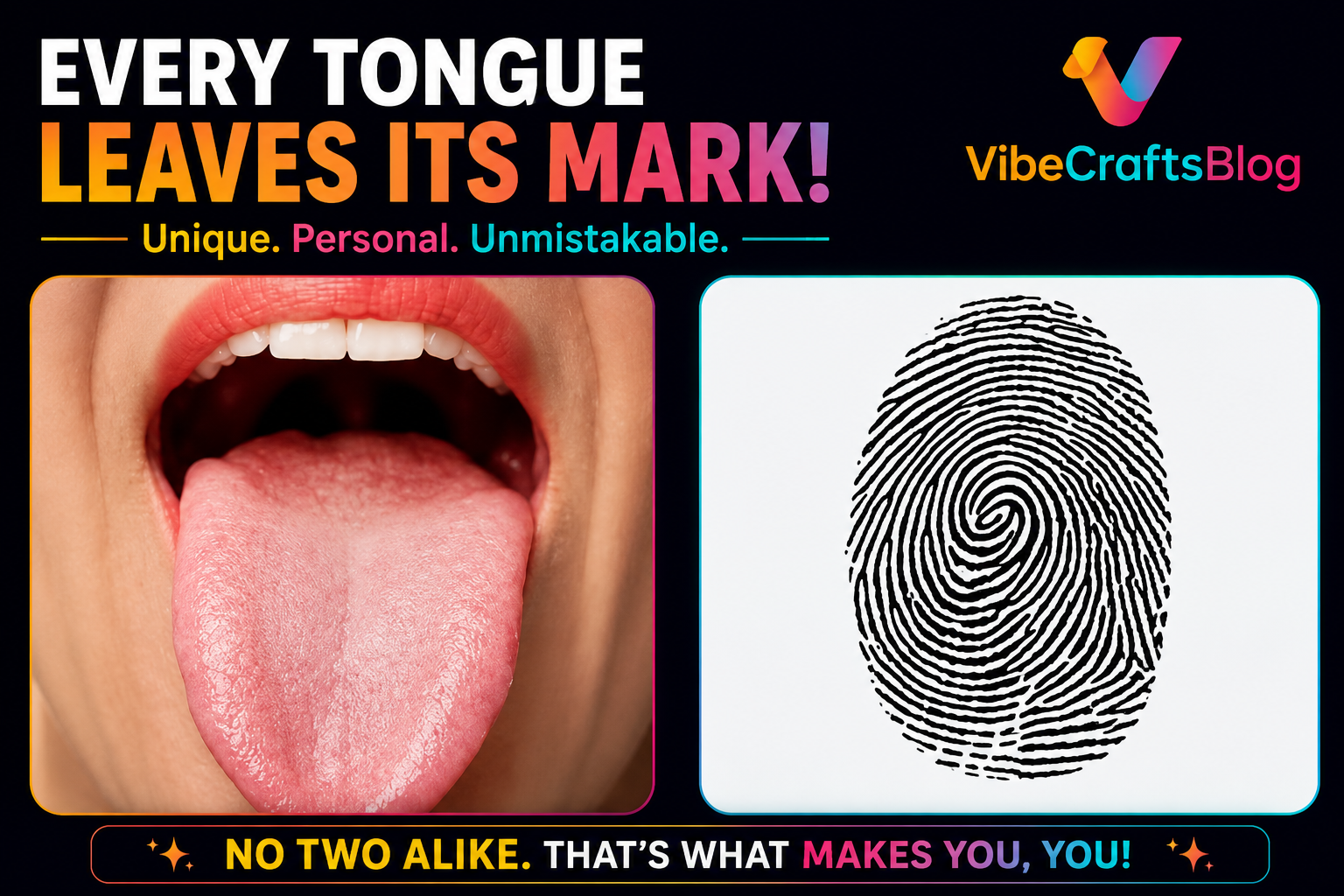
Your tongue helps you taste food, speak, and swallow. But its surface also has distinctive features, including small bumps, grooves, and lines. Scientists have explored whether these features could help with biometric identification and provide useful information about oral health.
Although tongue recognition is an area of research, it is not yet a widely used alternative to fingerprints. Understanding what researchers know—and what remains uncertain—helps separate scientific evidence from speculation.

What Makes Every Tongue Different?
The tongue’s surface contains tiny structures called papillae. They contribute to its texture, and some contain taste buds. Their appearance and distribution vary among individuals.
Tongues can differ in shape, surface grooves, and the visibility of certain structures. Factors such as genetics, age, hydration, and oral health can also influence their appearance.
However, the claim that every person’s tongue pattern is proven to be completely unique is stronger than the available evidence supports. Researchers continue to investigate how reliably tongue features can distinguish one person from another.
Can Tongue Patterns Be Used for Identification?
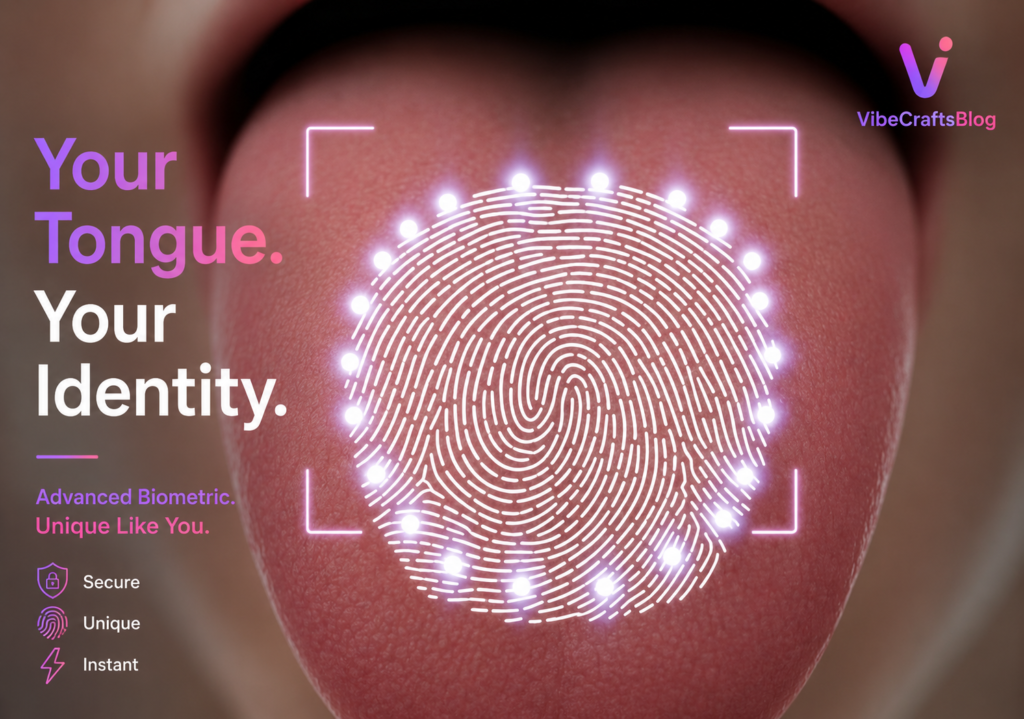
Researchers have studied tongue recognition as a possible biometric technology. Similar to fingerprint or facial recognition systems, it involves capturing physical features and comparing them with stored data.
A tongue-recognition system may analyze:
- Tongue shape and outline
- Surface grooves and texture
- The arrangement of visible features
- Other measurable characteristics in an image
Researchers must determine whether these features remain consistent over time and can distinguish individuals accurately under different conditions.
Tongue recognition could eventually have applications in identity verification or specialized security systems. However, more testing is needed before it can be considered a dependable, widely adopted identification method.
What Can Your Tongue Reveal About Your Health?

A tongue examination can provide clues about oral health and certain medical conditions. Dentists and doctors may look for changes in color, texture, swelling, or surface coating.
Some examples include:
- White coating: This can have several causes, including dry mouth, debris, or certain oral infections.
- Smooth appearance: An unusually smooth tongue can sometimes be associated with iron or vitamin deficiencies.
- Deep grooves: These are often harmless, although irritation or discomfort should be assessed.
- Swelling: A swollen tongue may result from inflammation, irritation, or an allergic reaction.
These signs do not confirm a particular condition on their own. A healthcare professional may need to consider other symptoms and perform additional examinations or tests.
How to Keep Your Tongue Healthy
Good oral hygiene can help maintain a healthy tongue and reduce the buildup of debris.
1. Clean it gently. Use a soft toothbrush or tongue scraper without applying excessive pressure.
2. Drink enough water. Staying hydrated helps prevent dry mouth, which can affect the tongue’s appearance and comfort.
3. Avoid tobacco. Smoking and other tobacco use can contribute to oral health problems and changes in the mouth.
4. Pay attention to persistent changes. Consult a dentist or doctor if you notice an unexplained sore, lump, unusual color change, or other problem that does not improve within two weeks.
Seek urgent medical attention if tongue swelling develops suddenly or causes difficulty breathing or swallowing.
Could Tongue Recognition Replace Fingerprints?
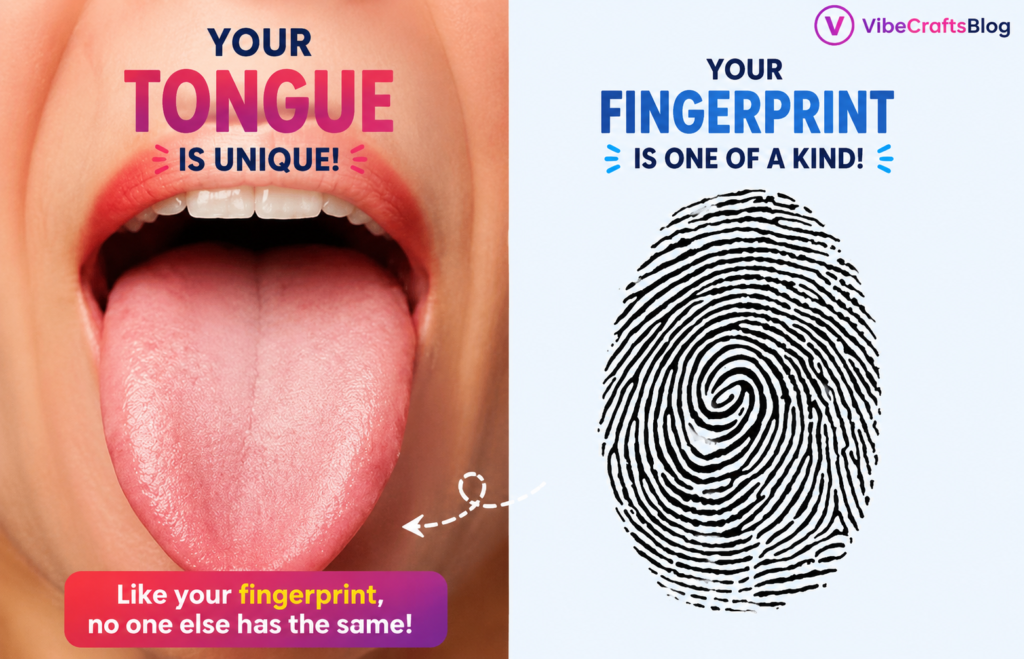
Fingerprints remain a well-established biometric method. Tongue recognition is still an emerging research area, and its practical usefulness depends on factors such as accuracy, convenience, hygiene, privacy, and the reliability of scanning equipment.
For now, tongue recognition should be viewed as a potential complementary technology rather than a proven replacement for existing identification systems.
Future research may clarify whether tongue features can provide reliable identity verification in specific situations.
Frequently Asked Questions
Is everyone’s tongue pattern unique?
Tongues have individual differences in shape and texture. However, the degree to which these differences can reliably identify every person is still being studied.
Can tongue appearance change?
Yes. Hydration, irritation, infections, injuries, and other factors can change the tongue’s appearance.
Can a doctor diagnose a disease by looking at the tongue?
A tongue examination can reveal useful clues, but appearance alone is rarely enough to confirm a diagnosis. Further evaluation may be necessary.
Is tongue recognition widely used today?
No. It remains an area of research rather than a mainstream biometric identification method.
Conclusion
The tongue has a complex surface that varies from person to person, making it an interesting subject for scientific research. Researchers are investigating whether its shape and texture could support biometric identification, while healthcare professionals already examine the tongue for possible signs of oral or general health problems.
However, tongue patterns should not be treated as a proven replacement for fingerprints or as a way to diagnose illnesses without professional assessment. As research develops, scientists may gain a clearer understanding of how these distinctive features can be used safely and reliably.