 11
11
Jan Koum’s story is a classic example of a rags-to-riches journey. He was born in 1976 in Kiev, then part of the Soviet Union, into a modest Jewish family. As a teenager he immigrated with his mother to the United States, settling in Mountain View, California. Life was far from easy — the family lived in a small two-bedroom apartment and relied on government assistance. To help make ends meet, Koum worked jobs like sweeping floors at a grocery store while learning English and discovering a passion for computer programming.
Koum’s interest in technology led him to study briefly at San Jose State University. Soon, he dropped out to pursue a job in tech, eventually working at Yahoo! as an infrastructure engineer. There, he spent nearly nine years honing his skills and learning how large internet services operate. It was also where he met Brian Acton, a colleague who would later become his partner in building something much bigger.
In 2007, after leaving Yahoo! with Acton to travel and explore new ideas, the duo applied for jobs at Meta Platforms (then Facebook). Both were turned down — a rejection that could have been discouraging but instead became a pivotal moment. Rather than settling for a job they didn’t get, Koum and Acton began thinking differently about how people communicate.
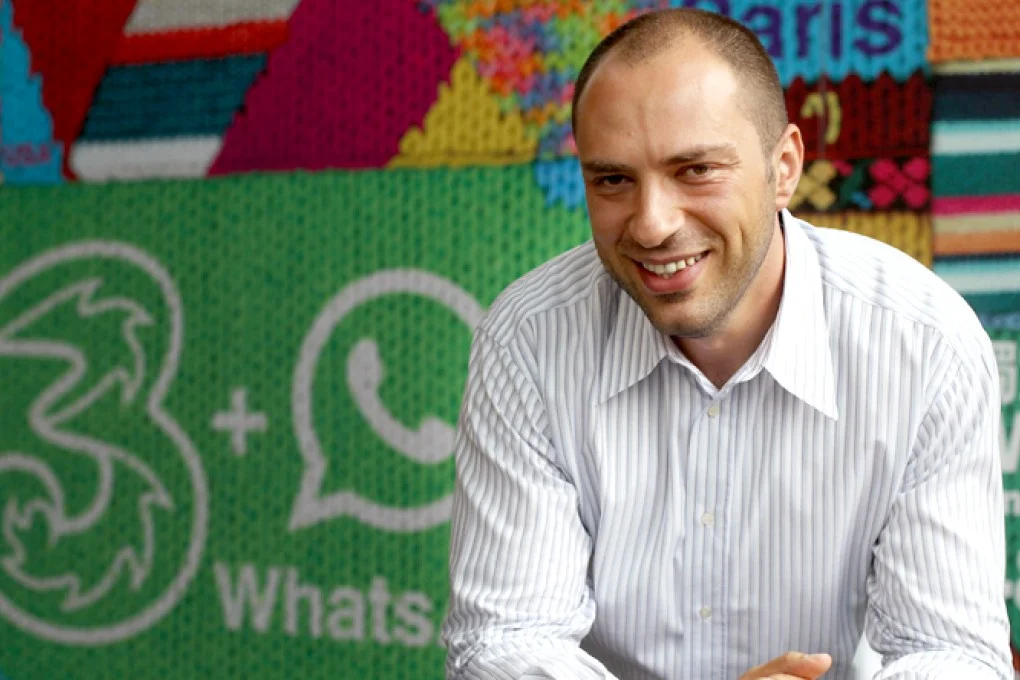
In 2009, Koum bought his first iPhone and saw something revolutionary: the App Store was creating a new frontier for mobile software. Inspired by this, he began working on an app that would let people see each other’s status and communicate more simply than traditional text messaging. Over time, this idea evolved into a messaging app — WhatsApp — designed for speed, simplicity, and global reach.
WhatsApp launched in 2009 and slowly gained users. Its clean design and focus on basic, reliable messaging helped it spread rapidly worldwide. What began as a small project between two friends quickly turned into one of the fastest-growing communication platforms ever created.
By 2014, WhatsApp’s success was impossible to ignore. With hundreds of millions of users around the globe, the app became one of the most ubiquitous tools for texting, sharing photos, and calling on any internet-connected device. That same year, Meta (then Facebook) agreed to acquire WhatsApp in a deal reported at around $19 billion in cash and stock — one of the largest tech acquisitions in history.
The acquisition made Koum and Acton multi-billionaires and cemented WhatsApp’s place as a global communication essential.
Since the acquisition, WhatsApp has continued to grow. As of 2026, the platform supports more than 2 billion users worldwide and has become a backbone of daily communication across continents, from family chats and business messaging to social and political coordination. Its influence on global messaging has been so significant that it reshaped how people communicate in regions like India, Brazil, and Europe.
In terms of worth, while WhatsApp no longer exists as an independent company after the Meta acquisition, the deal itself remains a benchmark in tech valuations. It was valued at around $19 billion at the time of purchase, and that valuation continues to be referenced as WhatsApp’s baseline worth in the tech world.
Today, Jan Koum is widely regarded as one of the most influential figures in modern tech. His journey — from a poor immigrant child to the creator of the world’s most used messaging platform — shows the power of resilience, curiosity, and innovation. Even after stepping back from daily involvement in WhatsApp and Meta, his impact on global communication technologies remains profound.
Koum’s story is not just about success — it’s about turning rejection into opportunity, creating tools that connect billions, and leaving an indelible mark on the digital age