 11
11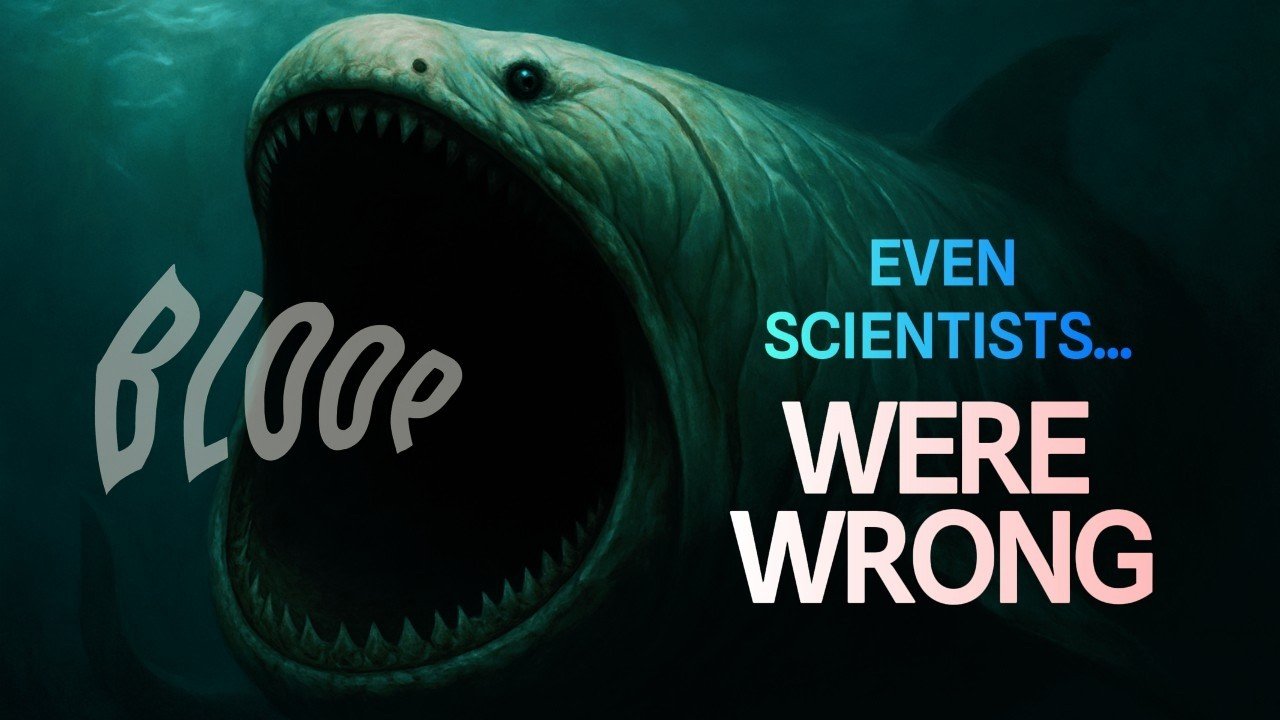
In 1997, scientists monitoring the oceans picked up one of the strangest and most powerful underwater noises ever recorded—a sound so loud and unusual that it sparked global curiosity and wild theories. This mysterious signal, later nicknamed the Bloop, was detected by researchers from the National Oceanic and Atmospheric Administration while using underwater microphones designed to track seismic and ocean activity.
The Bloop was recorded in the remote South Pacific Ocean. It was an ultra-low-frequency sound, powerful enough to be picked up by sensors over 5,000 kilometers apart. What made it so unusual wasn’t just its volume—it was the pattern of the sound.
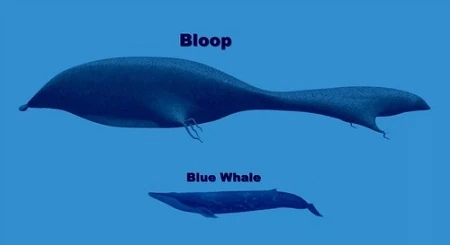
It rose rapidly in frequency, similar to the calls made by marine animals. However, its intensity was far beyond anything known at the time. Even the largest creature on Earth, the blue whale, could not produce a sound of that magnitude.
This led scientists to a startling theoretical conclusion: if the sound were made by a living organism, it would have to be larger than a blue whale.
As news of the Bloop spread, it quickly captured the imagination of the public. Some speculated about undiscovered deep-sea giants, while others linked it to fictional creatures like Cthulhu, a massive cosmic entity said to dwell beneath the ocean.
Scientists, however, remained cautious. While the sound shared similarities with biological noises, they knew the deep ocean is also full of non-living processes capable of producing powerful acoustic signals.
Years later, further analysis revealed a more grounded explanation. The Bloop was most likely caused by a natural phenomenon: the cracking and fracturing of large icebergs.
When massive ice structures break apart or shift, they release tremendous energy into the water, producing sounds that can travel vast distances. These icequakes can mimic the frequency patterns of animal calls, which initially caused confusion.
Researchers concluded that the Bloop originated from ice activity near Antarctica—powerful, but not alive.
https://www.profitablecpmratenetwork.com/gyfptqaaj?key=633840a40b8205035c8ee25894298f7fEven though the mystery has largely been solved, the Bloop remains one of the most intriguing oceanic discoveries. It highlights just how little we know about the deep sea and how easily natural phenomena can seem almost otherworldly.
The oceans cover more than 70% of our planet, yet much of their depths remain unexplored. Events like the Bloop remind us that Earth still holds secrets capable of surprising even the most experienced scientists.
While it wasn’t a giant unknown creature after all, the Bloop sparked imagination across the world. It blurred the line between science and mystery, showing how a single unexplained signal can lead to years of speculation and discovery.
And in a way, that’s what makes it so powerful—not just how loud it was, but how deeply it captured our curiosity about the unknown depths below