 11
11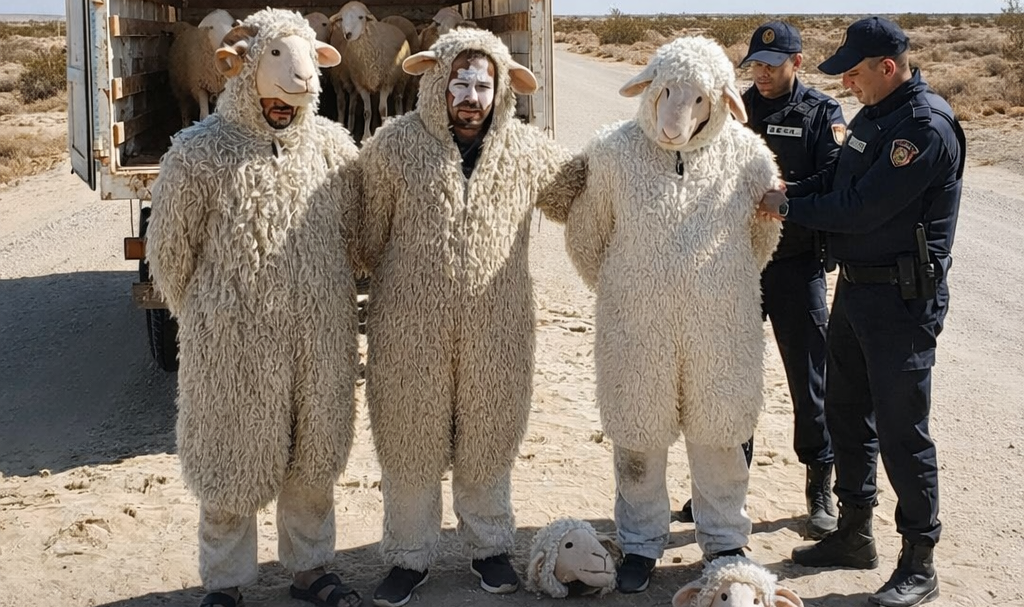
At first glance, the story sounds almost unbelievable: three men arrested in Algeria while attempting to enter Spain disguised as sheep. It’s the kind of headline that spreads rapidly across social media—equal parts shocking, humorous, and strangely fascinating.
But as with many viral stories, the truth is more complicated than it seems.
In early 2026, images began circulating online claiming to show three men dressed as sheep being arrested by authorities in Algeria. The narrative suggested that they had attempted to sneak into Spain by blending in with livestock being transported across borders.
The idea captured global attention. People shared the images widely, praising the “creativity” of the attempt or mocking the absurdity of the situation.
However, there was one major problem.
Fact-checking investigations revealed that the viral images were not real. According to a detailed report, the photos showing men in sheep costumes were AI-generated and digitally manipulated, not authentic documentation of an actual arrest.
Analysts found clear signs of artificial creation:
Even advanced detection tools indicated a 99% likelihood that the images were fabricated.
There were also no credible news reports confirming such an incident in reality.
Interestingly, while the viral 2026 version is false, similar claims and anecdotes have appeared before. Some reports and opinion pieces have referenced unusual migration attempts, including disguises, highlighting how desperate individuals sometimes resort to extreme measures.
However, these earlier mentions are sparse, not well-documented, and lack strong verification—suggesting that the “sheep disguise” narrative may have been exaggerated over time before being revived with AI-generated visuals.
https://www.profitablecpmratenetwork.com/gyfptqaaj?key=633840a40b8205035c8ee25894298f7fAlthough the viral story itself isn’t real, it reflects a very real issue.
The route from North Africa to Europe—particularly toward Spain—is one of the most dangerous migration paths in the world. Thousands attempt the journey every year, often risking their lives in overcrowded boats or unsafe conditions.
Desperation can lead to unusual and risky strategies. While disguising as sheep may not be a confirmed tactic, the broader truth remains: people seeking better opportunities sometimes go to extraordinary lengths.
This incident highlights two important modern realities:
AI-generated images are becoming increasingly realistic, making it harder to distinguish fact from fiction. A bizarre story paired with convincing visuals can easily mislead millions.
Unusual or humorous stories spread faster than ordinary news. The more shocking or absurd a claim is, the more likely it is to be shared without verification.
The story of three men disguising themselves as sheep to enter Spain may sound like something out of a comedy film—but in reality, it’s a modern example of how misinformation spreads in the digital age.
While the event itself isn’t real, the conversation it sparked is important. It reminds us to question what we see online, verify before sharing, and understand the deeper human issues that often lie beneath even the strangest headlines.
Sometimes, the most unbelievable stories aren’t just unlikely—they’re entirely fictional.