 11
11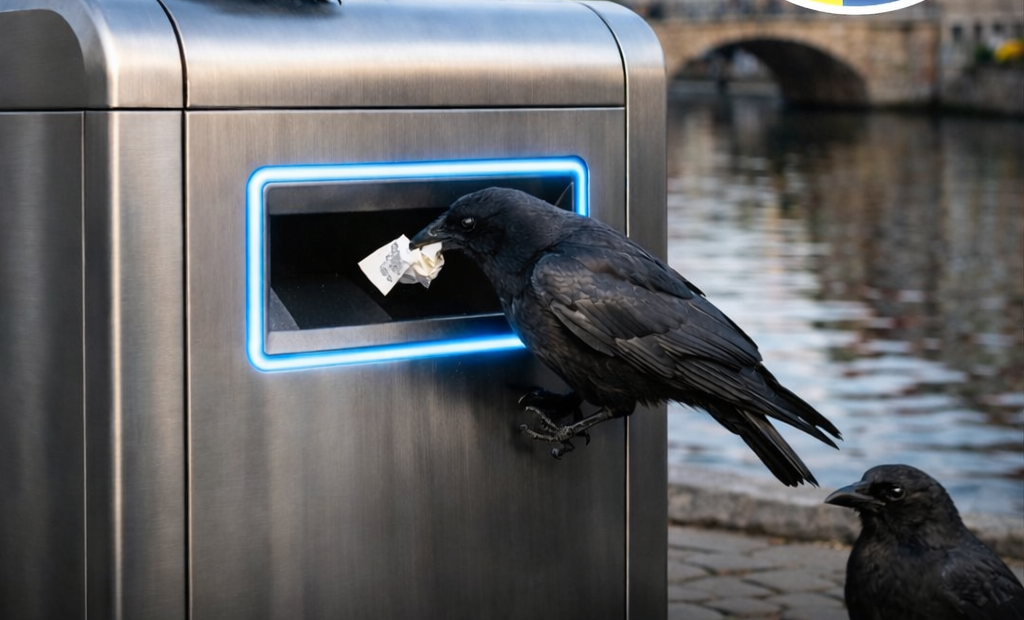
In an innovative blend of technology, behavioral science, and environmental thinking, Sweden has introduced a remarkable idea: training crows to collect trash and exchange it for food. This concept, developed by the startup Corvid Cleaning, is transforming the way cities think about waste management—by turning some of nature’s smartest birds into active participants in keeping streets clean.
At the heart of this project is a specially designed machine that functions like a vending system for birds. The process is simple yet ingenious:
This system uses positive reinforcement, encouraging the birds to repeat the behavior. Over time, crows learn that trash equals food, creating a consistent cycle of cleanup.
Crows are not ordinary birds. Scientists consider them among the most intelligent animals, capable of solving puzzles, using tools, and even learning from each other.
This intelligence makes them ideal for such a task. Once a few birds learn the system, others can copy the behavior, potentially scaling the impact without extensive human intervention. Their adaptability to urban environments also means they are already familiar with city life.
The project specifically targets cigarette butts—one of the most common forms of waste. In Sweden, they make up about 62% of all litter, creating both environmental and financial challenges.
Cleaning them manually is expensive and time-consuming. The crow-based system could significantly reduce these costs. Some estimates suggest municipalities could cut cleanup expenses by up to 75% if the method proves successful.
The idea is built on mutual benefit:
Importantly, the birds are not forced into this role—they participate voluntarily, interacting with the machines only when they choose to.
Despite its promise, the project raises important concerns. Critics question whether handling cigarette waste could harm the birds due to toxins like nicotine and microplastics. Others argue that humans should focus on reducing littering rather than relying on animals to clean up.
Additionally, large-scale implementation remains uncertain, as training wild animals and maintaining consistent behavior can be unpredictable.
The Swedish crow-cleaning initiative represents more than just a clever experiment—it hints at a future where humans collaborate with nature in unexpected ways. By combining animal intelligence with smart technology, cities may discover sustainable solutions that go beyond traditional methods.
In the end, this project is not just about cleaning streets—it’s about rethinking our relationship with the natural world.