 11
11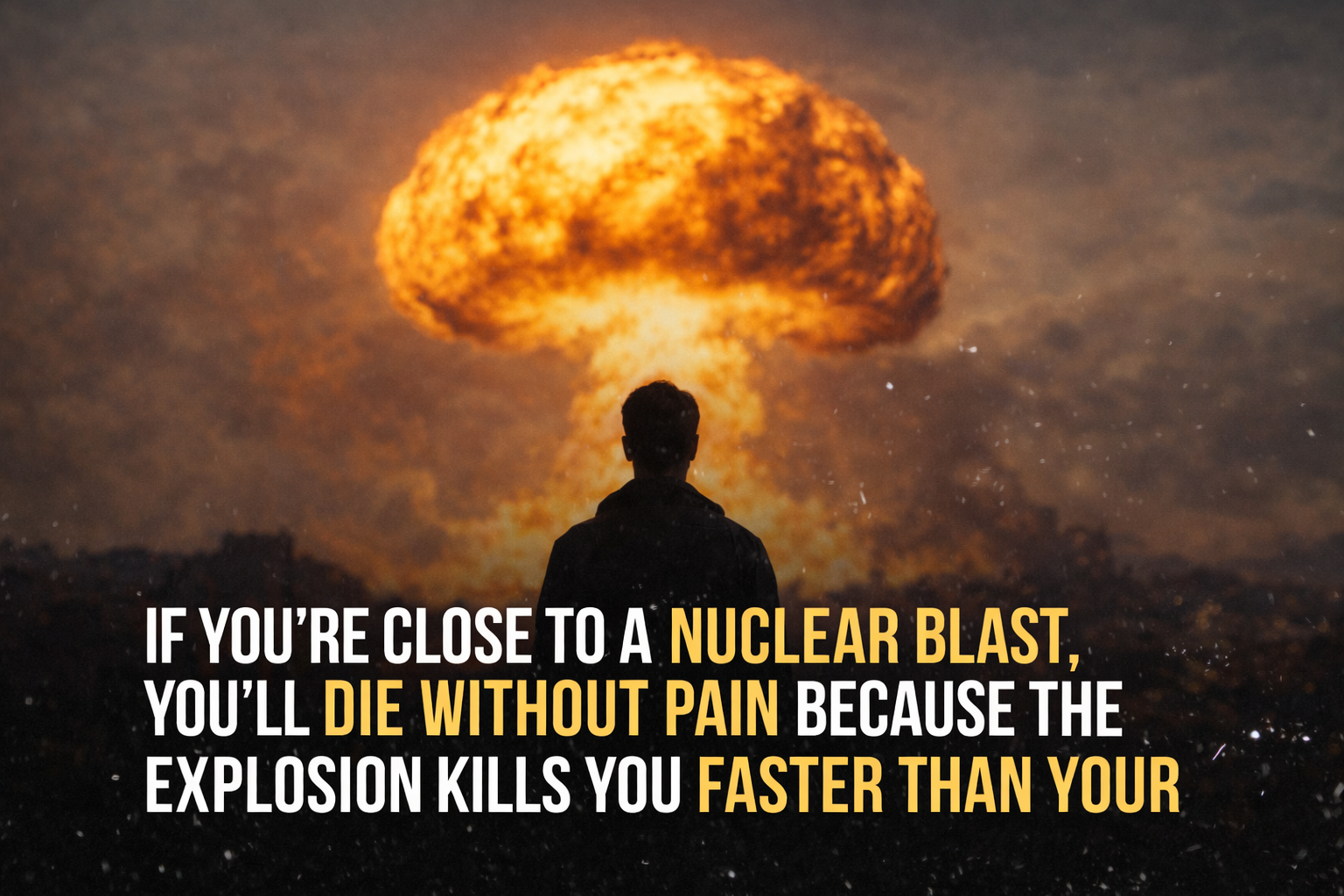
At the very center of a nuclear explosion, the human body is overwhelmed almost instantly, before pain can even be consciously processed. Extreme heat, crushing pressure, and intense radiation strike nearly simultaneously, unfolding on a timescale far faster than normal sensory perception.
Close to ground zero, the blast wave generates immense pressure capable of causing catastrophic trauma in an instant. At the same time, the expanding fireball reaches temperatures so high that human tissue cannot survive even brief exposure. Within fractions of a second, everything in the immediate area is subjected to destructive thermal energy.
Alongside these forces, powerful ionizing radiation penetrates the body, damaging cells and DNA at a microscopic level and delivering a lethal dose within moments.
What makes nuclear weapons uniquely devastating is the speed and scale of these combined effects. They occur so rapidly that there is virtually no opportunity for reaction, protection, or medical intervention.
Understanding these realities is not meant to inspire fear, but to recognize the true magnitude of their impact and why their consequences extend far beyond the moment of detonation.