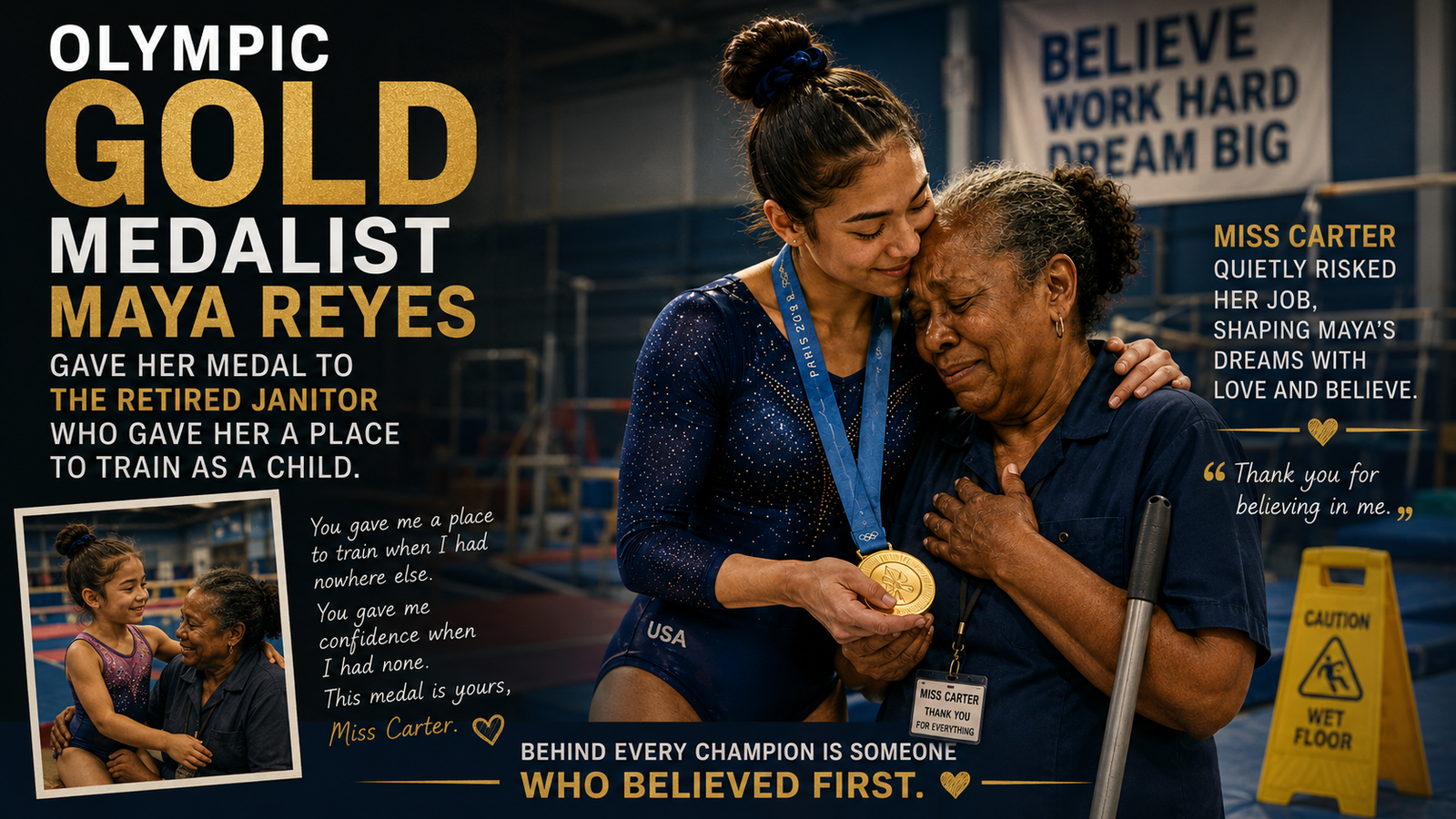
Meta Description: Olympic champion Maya Reyes gave her gold medal to the retired janitor who secretly helped her train as a struggling child.
Introduction
How many dreams disappear simply because nobody believes in them?
Most people never think about that question during a busy day. Yet for thousands of children, talent alone is not enough. They also need support, encouragement, and sometimes just one adult willing to help quietly in the background.
That is exactly why the story of Olympic gold medalist Maya Reyes touched millions of people around the world.
After winning gold on the biggest stage in sports, Maya shocked reporters by walking away from the spotlight and placing her medal around the neck of her former school janitor, Miss Carter. Cameras flashed everywhere. Meanwhile, the elderly woman stood frozen in tears.
To outsiders, it looked like a surprising emotional moment. However, for Maya, the gesture made complete sense. Years earlier, Miss Carter had secretly opened the school gym for her before sunrise. She cleaned floors after long shifts and still stayed late so a determined little girl could practice running drills indoors during harsh winters.
Even more touching, Miss Carter reportedly risked losing her job several times.
I have seen similar acts of quiet kindness in local sports communities. Usually, the people changing lives are not famous coaches or wealthy sponsors. Instead, they are often cafeteria workers, janitors, teachers, or neighbors who notice potential before anyone else does.
That is why this story resonates so deeply. It reminds people that success rarely belongs to one person alone.
Suggest Keywords: Maya Reyes Olympic story, janitor helped athlete, inspiring sports story, Olympic gold medal emotional moment, mentor support success, believing in children’s dreams
Who Is Maya Reyes?
Maya Reyes became an Olympic sensation after winning gold in track and field. Although her athletic ability impressed audiences worldwide, her emotional tribute afterward captured even more attention.
According to interviews shared after the event, Maya grew up in a low-income neighborhood where sports resources were extremely limited. Her mother worked double shifts, while transportation and training fees constantly created obstacles.
Still, Maya remained obsessed with running.
She practiced on cracked sidewalks, empty parking lots, and school hallways whenever possible. However, during bad weather, she struggled to find a safe place to train.
That is where Miss Carter entered her life.

The Quiet Sacrifice of Miss Carter
Miss Carter worked as a janitor at Maya’s middle school for decades. Students described her as warm, observant, and endlessly patient.
Although many adults overlooked Maya’s athletic passion, Miss Carter paid attention.
She noticed the young girl arriving early every morning. She also noticed Maya jogging laps around the building after school instead of going home immediately.
Eventually, Miss Carter began unlocking the gym before official opening hours.
At first, Maya only practiced for thirty minutes. Later, those sessions became part of her daily routine.
According to Maya, Miss Carter even saved old sports equipment from storage rooms so she could train properly.
That detail feels especially real to anyone familiar with struggling school athletic programs. Old cones, worn jump ropes, and dusty mats often become lifelines for young athletes with no money.
Meanwhile, Miss Carter reportedly kept the arrangement secret from administrators because unauthorized gym access violated school rules.
Nevertheless, she continued helping anyway.
Why Small Support Changes Lives
Many people assume success comes from talent alone. However, support systems matter just as much.
A child may have extraordinary potential, but without encouragement, that talent often fades.
In Maya’s case, Miss Carter provided three critical things:
1. A Safe Place to Practice
Training consistently matters in every sport.
Without indoor access, Maya would have missed countless practice sessions during storms and cold mornings.
2. Emotional Encouragement
Children remember adults who believe in them.
Even a few encouraging words can completely change someone’s confidence.
3. Stability During Difficult Years
Young athletes often face self-doubt. Therefore, having one reliable supporter creates emotional security.
I once knew a teenage boxer whose school bus driver waited an extra five minutes daily so he could attend practice after class. Years later, the athlete still talked about that kindness more than tournament victories.
Small actions stay with people forever.
The Olympic Moment That Moved Millions
After Maya won gold, reporters expected a standard celebration interview.
Instead, she searched the crowd for Miss Carter.
The retired janitor had reportedly attended the Olympics quietly without expecting recognition. She sat several rows behind Maya’s family and tried avoiding cameras.
Then everything changed.
Maya walked directly toward her and placed the medal around her neck.
For several seconds, neither woman spoke. The stadium crowd, however, immediately understood the emotional weight of the moment.
Videos spread online within hours.
People connected deeply with the story because it felt authentic. There were no flashy speeches or scripted emotions. Instead, viewers witnessed genuine gratitude.
That authenticity explains why the moment became unforgettable.
Real-Life Lesson: Mentorship Matters More Than Money
Not every child needs expensive equipment or elite coaching immediately.
Sometimes they simply need someone who says, “Keep going.”
That lesson applies far beyond sports.
For example, a struggling student may only need a teacher who stays after class twice a week. Similarly, a young artist may need access to basic supplies and encouragement.
Meanwhile, many adults underestimate how deeply children remember supportive moments.
A simple gesture can shape confidence for decades.
Real-Life Scenario: The Child Nobody Notices
Imagine a shy 11-year-old girl staying late after school every day.
Teachers assume she is waiting for a ride home. However, a school staff member notices she is actually practicing basketball alone with a broken hoop.
Instead of ignoring her, the staff member opens the gym twice weekly so she can practice safely indoors.
Years later, that child earns a college scholarship.
Stories like this happen more often than people realize.
Unfortunately, many talented children never receive that support.
Step-by-Step Ways Adults Can Encourage Young Talent
You do not need Olympic-level resources to help a child succeed.
Instead, small consistent actions often matter more.
Notice Effort, Not Just Talent
Children develop confidence when adults recognize hard work.
Rather than only praising natural ability, acknowledge dedication and persistence.
For example, saying “I saw how hard you practiced today” feels more meaningful than empty compliments.
Create Safe Opportunities
Many children lack proper spaces for learning or training.
If possible, help them access libraries, gyms, classrooms, or creative environments safely.
Listen Seriously
Young people often stop sharing dreams because adults dismiss them immediately.
Therefore, listening carefully can become surprisingly powerful.
Encourage Consistency
Success usually grows slowly.
Because of that, reminding children to stay patient matters tremendously.
Celebrate Small Wins
Tiny victories build momentum.
Improved grades, faster running times, or better discipline deserve recognition too.
The Emotional Side of Gratitude
Maya’s gesture also highlighted something society often forgets: gratitude matters.
Successful people sometimes distance themselves from humble beginnings. However, Maya publicly honored the person who supported her before fame arrived.
That honesty inspired many viewers.
Additionally, it reminded audiences that invisible workers contribute enormously to communities.
Janitors, cafeteria workers, security guards, and school assistants often form deep bonds with children. Yet society rarely celebrates their influence.
Miss Carter’s story changed that, even briefly.
Common Mistakes People Make When Supporting Young Dreams
Focusing Only on Results
Many adults care only about trophies or grades.
However, constant pressure can damage confidence and enjoyment.
Ignoring Emotional Support
Practical help matters, but emotional encouragement matters equally.
Children need reassurance during failures too.
Comparing Kids Constantly
Comparison creates insecurity quickly.
Instead, focus on personal growth and progress.
Assuming Small Actions Do Not Matter
People often believe they must make huge sacrifices to help others.
In reality, consistency matters far more than grand gestures.
Miss Carter did not buy expensive equipment. Instead, she gave time, access, and belief.
That changed everything.
Why This Story Resonates Worldwide
The story spread globally because it reflects universal experiences.
Almost everyone remembers someone who quietly helped them during difficult years.
Sometimes it was a teacher.
Sometimes it was a neighbor.
Sometimes it was a coach, librarian, or relative.
These supporters rarely expect recognition. Nevertheless, their influence becomes life-changing.
Additionally, the story arrives during a time when many people feel disconnected from one another. Because of that, genuine acts of loyalty and gratitude feel especially meaningful.
FAQ
Did Miss Carter really risk her job to help Maya?
According to the story shared publicly, she reportedly broke school access rules by allowing extra gym practice time.
Why did Maya give away her gold medal?
Maya explained that Miss Carter helped shape her dream when nobody else believed she could succeed.
What lesson does this story teach?
The story shows how small acts of support can completely change a child’s future.
Can ordinary people really make that much difference?
Absolutely. Consistent encouragement, safe spaces, and emotional support often shape confidence more than money does.
Conclusion
The story of Maya Reyes and Miss Carter is about far more than sports.
At its core, it is about belief.
A retired janitor saw potential in a struggling child long before the world noticed her. Instead of ignoring that spark, she protected it quietly and consistently.
Years later, an Olympic champion returned that kindness with public gratitude.
That moment reminds us that success rarely happens alone.
More importantly, it challenges ordinary people to pay closer attention to the children around them. Encouragement does not always require wealth, fame, or special expertise.
Sometimes all it takes is showing up consistently and believing in someone before the rest of the world does.