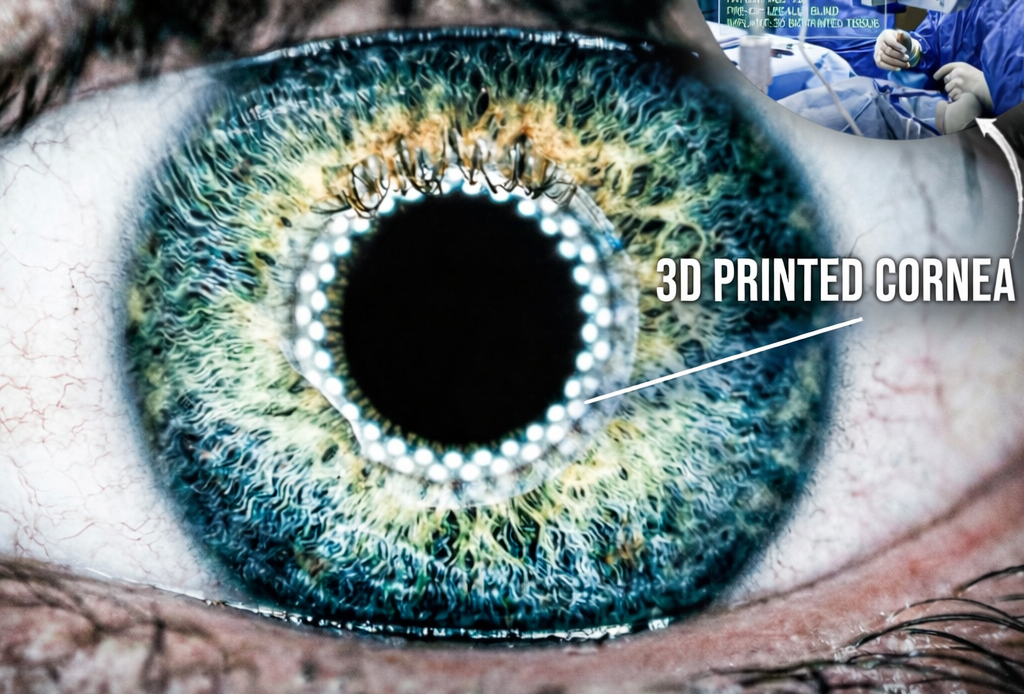
In a groundbreaking medical achievement, scientists have successfully used a 3D-printed cornea to restore sight in a blind patient—marking a major leap forward in the fight against preventable blindness. This innovation could transform the lives of millions worldwide who suffer from corneal damage and lack access to donor tissue.
Understanding the Cornea and Blindness
The cornea is the transparent outer layer of the eye that plays a critical role in focusing vision. When it becomes damaged due to injury, infection, or disease, it can lead to severe visual impairment or complete blindness. Traditionally, treatment has relied on corneal transplants using donated human tissue. However, the global shortage of donor corneas has left millions untreated.
This is where modern science and bioprinting step in.
The Breakthrough Technology
Researchers developed a bio-ink composed of collagen—the primary structural protein found in the human cornea—combined with stem cells. Using advanced 3D printing techniques, they were able to precisely shape this material into a functional cornea that mimics the natural structure of the human eye.
The First Successful Implant
In the first human application, a patient who had been blind due to corneal damage underwent surgery to receive the 3D-printed implant. Within weeks, the patient’s vision began to improve, and over time, sight was restored—an outcome once thought impossible without a donor transplant.
This success demonstrates that lab-made corneas can function effectively in real-world conditions, offering hope to patients who have been waiting years for treatment.
Why This Matters
The implications of this breakthrough are profound:
- Eliminates donor shortages: 3D printing allows corneas to be produced on demand
- Reduces costs: Manufacturing could make treatment more affordable globally
- Expands access: Particularly beneficial for low-income regions where donor tissue is scarce
- Improves safety: Lower risk of disease transmission compared to donor transplants
For millions of people living with corneal blindness, this technology could mean the difference between lifelong darkness and restored vision.
Challenges Ahead
While the results are promising, experts emphasize that more clinical trials are needed to ensure long-term safety and effectiveness. Researchers must also refine the technology to make it widely available and scalable.
Regulatory approvals, production standards, and surgical training will all play key roles in bringing this innovation into mainstream medical practice.
A New Era in Eye Care
The success of the 3D-printed cornea represents more than just a single medical milestone—it signals the arrival of a new era in regenerative medicine. As technologies like bioprinting continue to evolve, the possibility of creating fully functional organs and tissues is becoming increasingly real.
For now, the restoration of sight through a printed cornea stands as a powerful reminder of what science can achieve—turning vision loss into renewed hope for a brighter future.