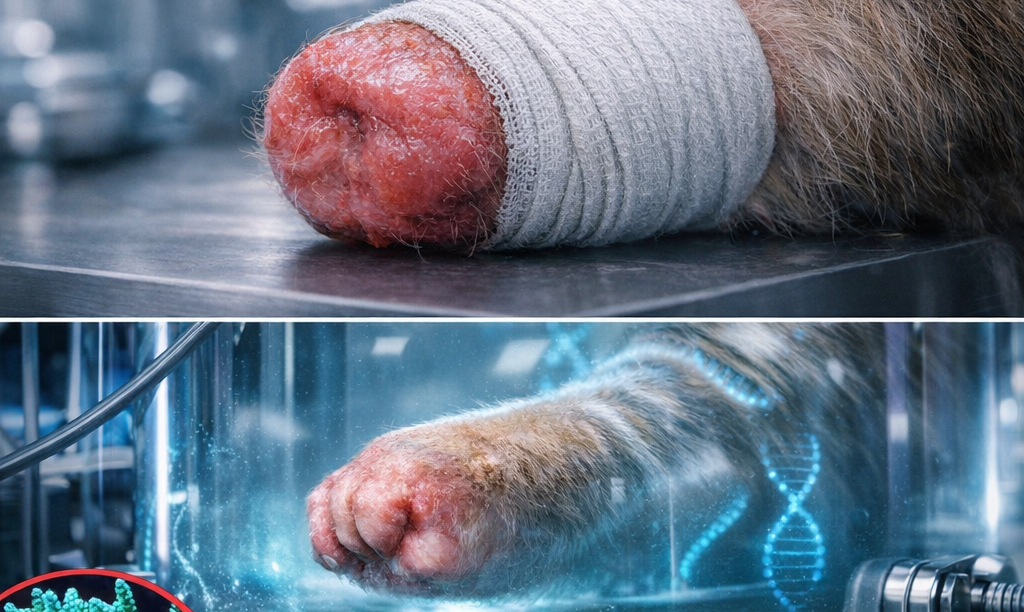
In a discovery that sounds almost like science fiction, a team led by a pioneering deep-sea biologist has reportedly identified a strand of coral DNA capable of triggering full limb regeneration in mammals—within just 60 days. If validated, this finding could mark one of the most significant medical breakthroughs in modern history, potentially transforming how we treat severe injuries and disabilities.
Life Lessons from the Deep Sea
Coral reefs, often associated with vibrant marine ecosystems, have long fascinated scientists for their resilience and regenerative abilities. Certain coral species can repair damage, regrow structures, and survive in harsh underwater environments. These capabilities have made them a subject of interest in the field of regenerative biology.
The research team focused on deep-sea coral species that endure extreme pressure, low temperatures, and minimal light. In such conditions, survival depends heavily on efficient cellular repair systems. By studying these organisms, scientists hoped to uncover biological mechanisms that could be applied to human medicine.
The Discovery of Regenerative DNA
According to the reported findings, the biologist isolated a specific genetic sequence within coral that appears to activate dormant regenerative pathways. When introduced into mammalian tissue in controlled laboratory settings, this DNA reportedly initiated rapid cell growth and organization, leading to the regrowth of complex structures such as muscle, bone, and even nerves.
Most astonishingly, early experiments suggested that severed limbs in test mammals could regenerate completely within approximately 60 days—far surpassing anything previously observed in mammals.
How It Might Work
While the exact mechanisms are still being studied, scientists believe the coral DNA interacts with cellular signaling systems that control growth and repair. In most mammals, these systems are limited, which is why injuries typically heal with scar tissue rather than full regeneration.
The coral-derived genetic material may “switch on” pathways that are otherwise inactive, allowing cells to behave more like those in highly regenerative animals such as salamanders. This includes:
- Rapid stem cell activation
- Precise tissue patterning
- Coordinated regrowth of multiple tissue types
If confirmed, this could represent a major leap forward in understanding how to unlock the body’s latent regenerative potential.
Medical Implications
However, experts caution that such breakthroughs require extensive validation. Translating results from controlled experiments to safe human treatments involves years—if not decades—of testing, ethical review, and clinical trials.
Skepticism and Scientific Scrutiny
Despite the excitement, the scientific community remains cautious. Extraordinary claims require extraordinary evidence, and findings of this magnitude must undergo rigorous peer review and independent replication.
There are also concerns about potential risks, such as uncontrolled cell growth, immune system reactions, or unintended genetic effects. Ensuring safety will be a critical step before any real-world application can be considered.
A Glimpse into the Future
Whether this discovery ultimately proves to be revolutionary or overstated, it highlights the immense potential hidden within Earth’s oceans. The deep sea remains one of the least explored frontiers, yet it may hold solutions to some of humanity’s greatest medical challenges.
If coral DNA truly holds the key to rapid limb regeneration, it could redefine the limits of healing—turning what was once considered impossible into a new reality.