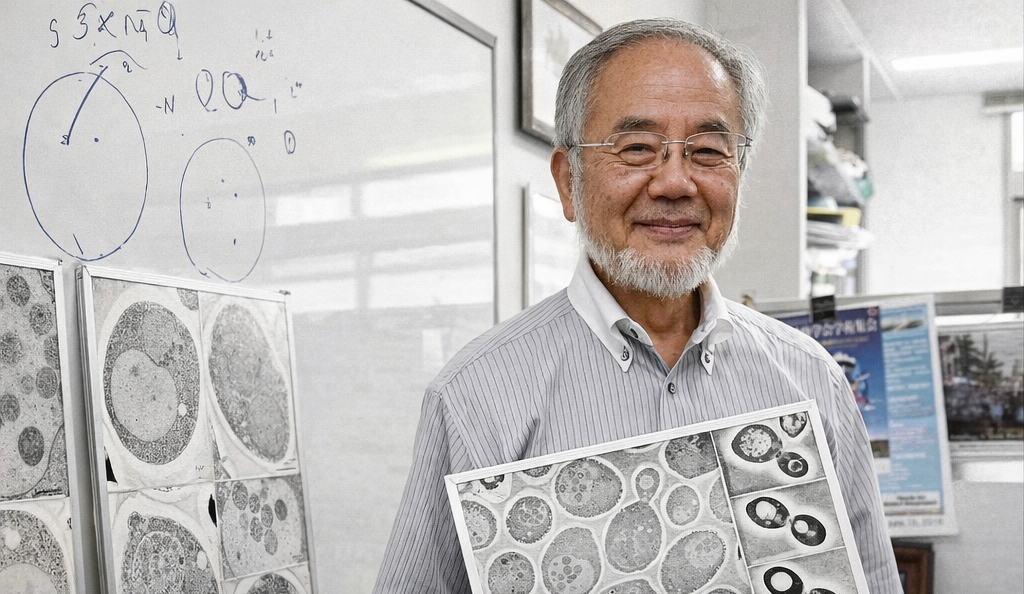
In 2016, Japanese cell biologist Yoshinori Ohsumi was awarded the prestigious Nobel Prize in Physiology or Medicine for his groundbreaking discoveries in the field of autophagy—a fundamental biological process that has transformed our understanding of how cells maintain and repair themselves.
What Is Autophagy?
Autophagy, derived from Greek words meaning “self-eating,” is a natural process by which cells break down and recycle their own damaged or unnecessary components. While the term may sound unusual, it represents one of the body’s most powerful internal maintenance systems.
Through autophagy, cells identify worn-out proteins, dysfunctional organelles, and harmful debris, enclosing them in membrane structures and delivering them to be degraded and reused. This process not only cleans up cellular waste but also provides energy and building blocks for cellular renewal.
Ohsumi’s Breakthrough Research
Before Ohsumi’s work, autophagy was known but poorly understood. In the early 1990s, he used yeast cells as a model to identify the genes responsible for this process. His meticulous experiments revealed the mechanisms that control how autophagy works at a cellular level.
By isolating and describing these key genes, Ohsumi laid the foundation for decades of research into how cells adapt to stress, starvation, and damage. His discoveries made it possible for scientists to explore how autophagy influences human health and disease.
Why Autophagy Matters
Autophagy plays a crucial role in maintaining overall health. It helps the body:
- Remove damaged cellular components
- Fight infections by eliminating harmful bacteria and viruses
- Adapt to periods of nutrient scarcity
- Prevent the buildup of toxic proteins
Disruptions in autophagy have been linked to a wide range of diseases, including cancer, neurodegenerative disorders like Alzheimer’s and Parkinson’s, and metabolic conditions.
In essence, autophagy acts as the body’s internal recycling and defense system—constantly working behind the scenes to keep cells functioning properly.
A New Frontier in Medicine
There is also growing interest in how lifestyle factors—such as fasting, exercise, and diet—may influence autophagy, though research in humans is still ongoing and complex.
Legacy of a Discovery
The work of Yoshinori Ohsumi has reshaped modern biology by revealing a hidden but essential function within our cells. His discovery reminds us that the body is not just a passive system but an active, self-regulating organism capable of repair and renewal at the microscopic level.
By uncovering autophagy, Ohsumi didn’t just solve a scientific mystery—he revealed one of the body’s most powerful healing mechanisms, offering hope for future breakthroughs in medicine and a deeper understanding of life itself.