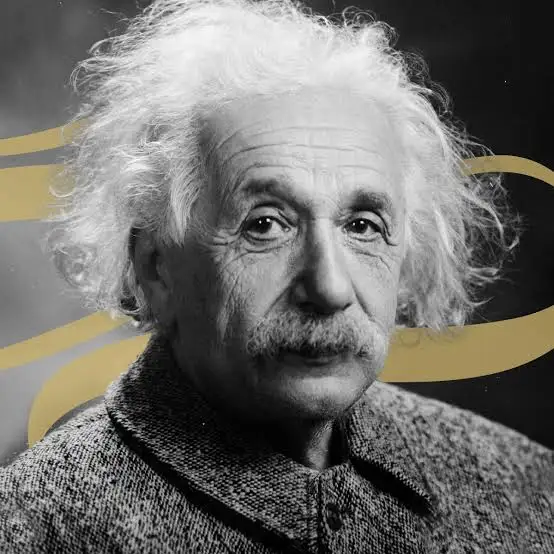
For more than a century, Albert Einstein has been celebrated as one of the greatest scientific minds in history. His theory of relativity changed how we understand space, time, gravity, and the universe itself. But some critics have raised a dramatic question: Did Einstein fake the math? Did he break the laws of physics because he was afraid of the truth?
It is true that Einstein challenged classical physics. Before him, Isaac Newton’s laws dominated science for over 200 years. Newton’s equations explained motion and gravity with incredible accuracy. However, by the late 19th century, certain experiments no longer fit perfectly within Newton’s framework.
Einstein did not “break” the laws of physics. Instead, he expanded them. In 1905, his Special Theory of Relativity showed that time and space are not absolute. Later, in 1915, his General Theory of Relativity described gravity not as a force, but as the curvature of spacetime.
These ideas were controversial. Many scientists initially doubted him. However, in 1919, an expedition led by Arthur Eddington observed a solar eclipse and confirmed Einstein’s prediction that light bends around massive objects. This was powerful evidence supporting his theory.
Science works through testing and verification. If Einstein had “faked” the math, his theories would have collapsed under experimental scrutiny. Instead, over the decades, relativity has been confirmed again and again—through particle accelerators, GPS satellites, and gravitational wave detection.
That said, Einstein was not perfect. He resisted some aspects of quantum mechanics, famously saying, “God does not play dice.” Ironically, later experiments showed that quantum theory works extremely well—even when it challenged Einstein’s personal beliefs.
The idea that Einstein faked mathematics or broke physics out of fear is a dramatic narrative. But history shows something different. He questioned old assumptions. He followed the evidence. And when experiments disagreed with classical ideas, he searched for better explanations.
In science, challenging the “truth” is not fear. It is courage.